by Vegas Writer
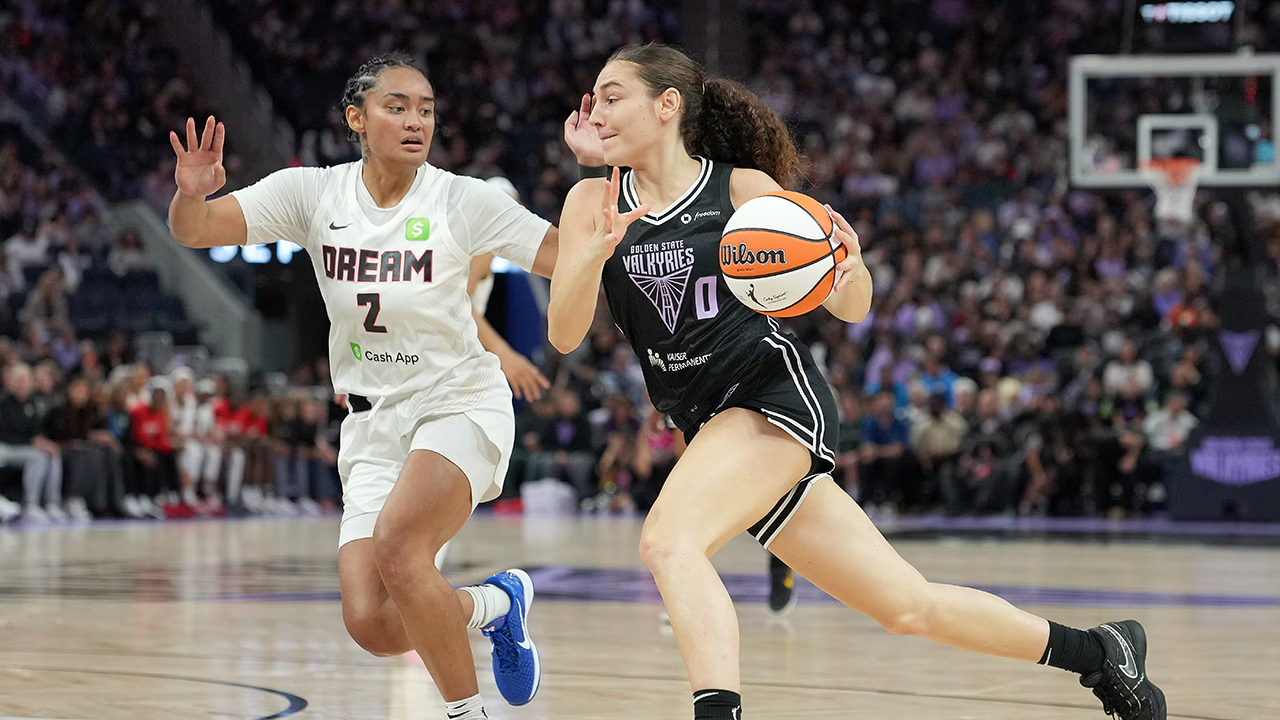
Wednesday, Oct 14, 2026The WNBA Finals will produce a first-time champion, with Atlanta and Golden State arriving after semifinal sweeps. The Dream eliminated New York; the Valkyries dethroned Las Vegas. Their best-of-seven series begins Saturday at Chase Center.
Golden State swept three regular-season meetings, but two were decided by five points or fewer. Atlanta has grown into a tougher playoff opponent. The matchup comes down to whether the Dream can generate enough offense against Golden State’s defensive pressure without sacrificing their own physical identity.
GUARDS
Jordin Canada and Rhyne Howard give Atlanta a dangerous combination of penetration, perimeter size and playmaking. Canada delivered 19 points and 11 assists in the semifinal clincher, while Howard scored 21. Their ability to create together helps Atlanta survive defensive pressure.
Golden State counters with Veronica Burton’s ball pressure, Tiffany Hayes’ downhill aggression and Kaitlyn Chen’s energy. Burton can disrupt Canada’s rhythm, while Hayes supplies offense when possessions stall.
Allisha Gray remains day-to-day after a minor procedure on her injured left hand. Her effectiveness could swing this category. Atlanta gets my narrow edge because Canada and Howard are playing with confidence, but without Gray, their workload becomes considerably harder.
ADVANTAGE: DREAM, narrowly
FORWARDS
Angel Reese and DeWanna Bonner bring rebounding, length and different ways to attack. Reese, the Defensive Player of the Year, forces opponents to work for position and creates extra possessions. Bonner delivered 13 points and 13 rebounds in Atlanta’s series-clinching victory, demonstrating her value when games tighten.
Golden State’s Gabby Williams has been its postseason offensive engine, averaging 22.7 points, 4.3 rebounds and four assists entering the Finals. Kayla Thornton complements her with physical defense and perimeter shooting; Janelle Salaün adds another versatile option.
Reese is Atlanta’s strongest individual matchup weapon, but Williams’ shot creation and Golden State’s interchangeable defenders give the Valkyries more flexibility across this group.
ADVANTAGE: VALKYRIES, narrowly.
CENTERS
Brionna Jones’ season-ending left leg injury leaves Atlanta without an experienced interior scorer. The Dream must compensate through Reese’s work inside, Naz Hillmon’s activity and their remaining frontcourt options.
Kiah Stokes gives Golden State an established defensive anchor. She finished the semifinal clincher with 11 points and 10 rebounds, making all five shots. Against Atlanta in June, she blocked seven shots in one game.
Stokes does not need heavy offensive usage to influence the series. Protecting the rim, screening and finishing defensive possessions can be enough. Atlanta must pull her away from the basket or punish help rotations before she gets established.
ADVANTAGE: VALKYRIES.
COACHING
Karl Smesko deserves credit for adapting Atlanta’s attack and keeping the Dream organized through injuries. Their ability to sweep New York without Gray for most of the series reflects preparation and trust in expanded roles.
Natalie Nakase has built Golden State around defensive accountability, depth and collective execution. The Valkyries overcame a 13-point deficit in their semifinal clincher, then outscored Las Vegas 16-6 in overtime.
I slightly prefer Nakase because Golden State has shown more ways to change a game defensively. A longer series should reward her ability to adjust assignments and combinations while preserving the team’s identity.
ADVANTAGE: VALKYRIES, narrowly.
X-FACTOR
Hayes is the player best equipped to change the series outside the primary matchups. Her penetration can force Atlanta’s defense to collapse, opening perimeter opportunities and creating easier finishes for teammates.
She scored 21 points in Game 2 against Las Vegas, then supplied 11 in the clincher. That production gives Golden State another creator when Atlanta loads up on Williams.
Bonner and Isobel Borlase give Atlanta meaningful answers, but Hayes’ ability to manufacture offense off the bench is especially valuable in a series where clean looks should be difficult to find.
ADVANTAGE: VALKYRIES.
WHY THE DREAM WIN
Atlanta wins by controlling the glass, converting turnovers into transition opportunities and keeping Canada aggressive. Reese must turn physical possessions into extra chances, while Howard stretches the defense and Bonner punishes mismatches.
A productive Gray return would reduce the burden on everyone. Atlanta also needs an early road victory to change the series’ rhythm. If those pieces come together, the Dream can finish the job at home.
DREAM’S WINNING SCENARIO: ATLANTA IN SIX.
WHY THE VALKYRIES WIN
Golden State wins by limiting penetration, making Atlanta score against a set defense and spreading the offensive responsibility. Williams provides the late-possession answer, Stokes protects the paint and Hayes supplies the bench surge.
Home-court advantage and defensive versatility give Golden State the stronger foundation.
VALKYRIES' WINNING SCENARIO: VALKYRIES IN SIX.
Golden State swept three regular-season meetings, but two were decided by five points or fewer. Atlanta has grown into a tougher playoff opponent. The matchup comes down to whether the Dream can generate enough offense against Golden State’s defensive pressure without sacrificing their own physical identity.
GUARDS
Jordin Canada and Rhyne Howard give Atlanta a dangerous combination of penetration, perimeter size and playmaking. Canada delivered 19 points and 11 assists in the semifinal clincher, while Howard scored 21. Their ability to create together helps Atlanta survive defensive pressure.
Golden State counters with Veronica Burton’s ball pressure, Tiffany Hayes’ downhill aggression and Kaitlyn Chen’s energy. Burton can disrupt Canada’s rhythm, while Hayes supplies offense when possessions stall.
Allisha Gray remains day-to-day after a minor procedure on her injured left hand. Her effectiveness could swing this category. Atlanta gets my narrow edge because Canada and Howard are playing with confidence, but without Gray, their workload becomes considerably harder.
ADVANTAGE: DREAM, narrowly
FORWARDS
Angel Reese and DeWanna Bonner bring rebounding, length and different ways to attack. Reese, the Defensive Player of the Year, forces opponents to work for position and creates extra possessions. Bonner delivered 13 points and 13 rebounds in Atlanta’s series-clinching victory, demonstrating her value when games tighten.
Golden State’s Gabby Williams has been its postseason offensive engine, averaging 22.7 points, 4.3 rebounds and four assists entering the Finals. Kayla Thornton complements her with physical defense and perimeter shooting; Janelle Salaün adds another versatile option.
Reese is Atlanta’s strongest individual matchup weapon, but Williams’ shot creation and Golden State’s interchangeable defenders give the Valkyries more flexibility across this group.
ADVANTAGE: VALKYRIES, narrowly.
CENTERS
Brionna Jones’ season-ending left leg injury leaves Atlanta without an experienced interior scorer. The Dream must compensate through Reese’s work inside, Naz Hillmon’s activity and their remaining frontcourt options.
Kiah Stokes gives Golden State an established defensive anchor. She finished the semifinal clincher with 11 points and 10 rebounds, making all five shots. Against Atlanta in June, she blocked seven shots in one game.
Stokes does not need heavy offensive usage to influence the series. Protecting the rim, screening and finishing defensive possessions can be enough. Atlanta must pull her away from the basket or punish help rotations before she gets established.
ADVANTAGE: VALKYRIES.
COACHING
Karl Smesko deserves credit for adapting Atlanta’s attack and keeping the Dream organized through injuries. Their ability to sweep New York without Gray for most of the series reflects preparation and trust in expanded roles.
Natalie Nakase has built Golden State around defensive accountability, depth and collective execution. The Valkyries overcame a 13-point deficit in their semifinal clincher, then outscored Las Vegas 16-6 in overtime.
I slightly prefer Nakase because Golden State has shown more ways to change a game defensively. A longer series should reward her ability to adjust assignments and combinations while preserving the team’s identity.
ADVANTAGE: VALKYRIES, narrowly.
X-FACTOR
Hayes is the player best equipped to change the series outside the primary matchups. Her penetration can force Atlanta’s defense to collapse, opening perimeter opportunities and creating easier finishes for teammates.
She scored 21 points in Game 2 against Las Vegas, then supplied 11 in the clincher. That production gives Golden State another creator when Atlanta loads up on Williams.
Bonner and Isobel Borlase give Atlanta meaningful answers, but Hayes’ ability to manufacture offense off the bench is especially valuable in a series where clean looks should be difficult to find.
ADVANTAGE: VALKYRIES.
WHY THE DREAM WIN
Atlanta wins by controlling the glass, converting turnovers into transition opportunities and keeping Canada aggressive. Reese must turn physical possessions into extra chances, while Howard stretches the defense and Bonner punishes mismatches.
A productive Gray return would reduce the burden on everyone. Atlanta also needs an early road victory to change the series’ rhythm. If those pieces come together, the Dream can finish the job at home.
DREAM’S WINNING SCENARIO: ATLANTA IN SIX.
WHY THE VALKYRIES WIN
Golden State wins by limiting penetration, making Atlanta score against a set defense and spreading the offensive responsibility. Williams provides the late-possession answer, Stokes protects the paint and Hayes supplies the bench surge.
Home-court advantage and defensive versatility give Golden State the stronger foundation.
VALKYRIES' WINNING SCENARIO: VALKYRIES IN SIX.
