by Team Del Genio
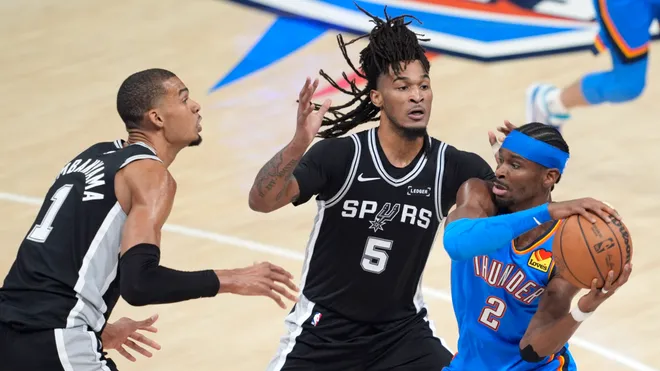
Sunday, May 31, 2026Saturday’s final showdown between the San Antonio Spurs and the Oklahoma City Thunder was yet another demonstration that the days of deferring to playing the under in a Game 7 of an NBA playoff series are over.
The conventional wisdom is that Game 7s are lower-scoring games. The stakes are higher, so the pressure is at its highest. After six straight games against each other, the defensive adjustments are considered to have the upper hand at that point. Inevitably, the oddsmakers adjust, and eventually the betting public is too slow to respond that the number has dropped too low.
In this series, the oddsmakers installed the over/under for Game 6 at 218.5. The Game 7 under “tax” is six points with the oddsmakers installing the over/under for this game at 212.5 (although the number dropped to 211.5 in several spots). There will be plenty of bettors willing to pay that tax and take the under. This Game 7 under tax has been in place for many years, with sharp bettors aware of the strong under trends in these Game 7s. Yet bettors and handicappers relying on databases that go back to the early 2000s may be relying on garbage data for the modern NBA. The name on the jersey may still say “Spurs”, yet there are not many other similarities between the 2005 Tim Duncan San Antonio Spurs and the 2026 Victor Wembanyama San Antonio Spurs (and there is even a bigger difference between the 2026 Oklahoma City Thunder and the defensive-minded 2005 Detroit Pistons, who the Spurs played in the NBA Finals that season.
Six of the previous ten Game 7s in the NBA playoffs have finished over the number heading into Saturday night. In the previous thirty-five games in the Conference finals, when the oddsmakers installed the over/under from 209 to 216, the game finished over the total 25 times.
The NBA in the 2025-26 season is not only different than in the 2004-2005 season, but it is significantly different than the 2024-25 NBA. The biggest difference in the modern game now than two decades ago is the prevalence of the 3-point shot. Yet the biggest difference between the NBA this year and last season is that more and more teams are relying on playing fast. Even long-tenured and successful head coaches like Erik Spoelstra abandoned past practices this year to embrace playing up-tempo and privileging taking quick shots over slow-developing pick-and-roll-based offensive schemes. There are several advantages to playing fast. It creates the opportunity to find high-quality shots before the opponent’s defense is set. It also challenges the stamina and endurance of your opponent. How many times did Reggie Miller, on the national broadcast during Game 7, implore Oklahoma City to move faster early in the shot clock?
The Spurs are playing at the second-highest pace of all sixteen teams in the playoffs. Game 7s in the NBA playoffs are less likely to become the stereotypical slow and plodding game if one of the teams is getting up the court quickly. Obviously, the pace of play gets quicker. These are offensive schemes that are more likely to shoot earlier in the shot clock. Playing faster also creates more opportunities for mistakes, turnovers, and quick scoring opportunities for the opponent. More 3-point shooting also puts pressure on the over. If Game 7 nerves are going to impact shooting, a 35% field goal percentage from behind the 3-point line coming from ten more shots from 3-point land is going to result in ten more points. The penalty from a subpar shooting effort is not as stiff if more of those shots are rewarded by adding three points to the score.
Oklahoma City only shot 37.2% from the field in Game 6 when scoring just 91 points. Yet the silver lining for head coach Mark Daigneault was that the game getting out of hand in the second half allowed him to rest his starters for this game. Shai Gilgeous-Alexander only played 28 minutes on Thursday. He scored just 15 points on 6 of 18 shooting, yet the reigning two-time NBA Most Valuable Player award winner would probably play better in Game 7. Jalen Williams returned from injury in Game 6, yet was ineffective in his ten minutes. He was out for Game 7. Clarity on his status tonight may help Daigneault establish a better offensive game plan. The Thunder had played seven of their previous ten games over the total when playing with revenge from a loss on the road to their current opponent. They had played seven of their previous ten games over the number after losing their previous game. Oklahoma City had played seven of its previous ten games in the conference finals over the total. They have played sixteen of their previous twenty-four games over the number when the oddsmakers installed the over/under from 210 to 219.5. The Thunder had played twenty-three of their previous thirty-five games over the total when the oddsmakers installed the over/under from 3.5 to 9.5 points.
San Antonio got another great game from Victor Wembanyama, who scored 28 points in Game 6. Dylan Harper added 18 points off the bench. The Spurs had played nine of their previous fourteen games over the number when the oddsmakers installed the over/under from 210 to 219.5. They had played seven of their eight games on the road in the postseason over the total. In their five playoff games this year, when the series was tied, all five of those games finished over the number. San Antonio had played nine of their previous twelve games over the total when the oddsmakers installed them as an underdog, getting 3.5 to 9.5 points. Four of the six games in this series had had 231 or more combined points scored. The two exceptions (that also finished under the total) were when the Thunder were playing in San Antonio, and they only shot 33.0% and 37.2% from the field. At home, Oklahoma City had shot at least 40.6% from the field in this series, and they made 48.2% and 47.9% of their shots in their last two games at home in this series despite being without Jalen Williams for seven of those eight quarters.
Nerves were not on display early in this Game 7. San Antonio raced out to score 32 points in the opening quarter despite playing on the road. They ended the quarter with a seven-point lead with 57 combined points, presenting a great start to the game finishing over the total. At halftime, the Spurs had a 56-53 lead. If Game 7 nerves ever influenced this game, it was in the third quarter when both teams only scored 24 points apiece. Yet San Antonio scored 31 points in the fourth quarter. With the Spurs leading 109-103 with 52 seconds left, it looked like everyone’s over tickets were safe. Yet many bettors holding 212.5 tickets got anxious when the Thunder could not score, yet kept getting offensive rebounds rather than San Antonio getting the ball and quickly getting fouled. Fortunately, when the Spurs finally pulled down a defensive rebound, they opted for a celebratory fast break slam dunk to end the game with a 111-103 victory.
Some may say that it was a lucky victory, as if only two points scored in the final 52 seconds in a game with a six-point margin was not the more significant aberration. We think the result demonstrates that the six-point tax oddsmakers installed on their Game 7 over/under number was too much. Both teams shot 45% from the field. Gilgeous-Alexander did raise his level of play in Game 7 and scored 35 points. The Thunder only made 34% of their 3-point shots, yet by taking 35 shots from 3-point range, they added 36 points to their score from those shots. San Antonio made 42% of their 40 shots from 3-point land, which added 51 points to their score.
Seven of the previous eleven Game 7s in the NBA playoffs have now finished over the total. That is too small of a sample size to begin expecting overs to cash tickets moving forward. Yet it is enough to suggest the oddsmakers' Game 7 under tax has gone too far. It is enough to suggest that historical trends that rely on results from a quarter of a century ago are outdated. Perhaps 2026 team trend data for the two opponents should be given more weight than 2005 league-wide data? The NBA Finals feature two teams, the Spurs and the New York Knicks, that have played 19 of their 32 combined games in the postseason over the number. That is not enough evidence to take the over in Game 1, yet it should be enough evidence for bettors to reconsider their under bets before walking to the teller. Good luck - TDG.
The conventional wisdom is that Game 7s are lower-scoring games. The stakes are higher, so the pressure is at its highest. After six straight games against each other, the defensive adjustments are considered to have the upper hand at that point. Inevitably, the oddsmakers adjust, and eventually the betting public is too slow to respond that the number has dropped too low.
In this series, the oddsmakers installed the over/under for Game 6 at 218.5. The Game 7 under “tax” is six points with the oddsmakers installing the over/under for this game at 212.5 (although the number dropped to 211.5 in several spots). There will be plenty of bettors willing to pay that tax and take the under. This Game 7 under tax has been in place for many years, with sharp bettors aware of the strong under trends in these Game 7s. Yet bettors and handicappers relying on databases that go back to the early 2000s may be relying on garbage data for the modern NBA. The name on the jersey may still say “Spurs”, yet there are not many other similarities between the 2005 Tim Duncan San Antonio Spurs and the 2026 Victor Wembanyama San Antonio Spurs (and there is even a bigger difference between the 2026 Oklahoma City Thunder and the defensive-minded 2005 Detroit Pistons, who the Spurs played in the NBA Finals that season.
Six of the previous ten Game 7s in the NBA playoffs have finished over the number heading into Saturday night. In the previous thirty-five games in the Conference finals, when the oddsmakers installed the over/under from 209 to 216, the game finished over the total 25 times.
The NBA in the 2025-26 season is not only different than in the 2004-2005 season, but it is significantly different than the 2024-25 NBA. The biggest difference in the modern game now than two decades ago is the prevalence of the 3-point shot. Yet the biggest difference between the NBA this year and last season is that more and more teams are relying on playing fast. Even long-tenured and successful head coaches like Erik Spoelstra abandoned past practices this year to embrace playing up-tempo and privileging taking quick shots over slow-developing pick-and-roll-based offensive schemes. There are several advantages to playing fast. It creates the opportunity to find high-quality shots before the opponent’s defense is set. It also challenges the stamina and endurance of your opponent. How many times did Reggie Miller, on the national broadcast during Game 7, implore Oklahoma City to move faster early in the shot clock?
The Spurs are playing at the second-highest pace of all sixteen teams in the playoffs. Game 7s in the NBA playoffs are less likely to become the stereotypical slow and plodding game if one of the teams is getting up the court quickly. Obviously, the pace of play gets quicker. These are offensive schemes that are more likely to shoot earlier in the shot clock. Playing faster also creates more opportunities for mistakes, turnovers, and quick scoring opportunities for the opponent. More 3-point shooting also puts pressure on the over. If Game 7 nerves are going to impact shooting, a 35% field goal percentage from behind the 3-point line coming from ten more shots from 3-point land is going to result in ten more points. The penalty from a subpar shooting effort is not as stiff if more of those shots are rewarded by adding three points to the score.
Oklahoma City only shot 37.2% from the field in Game 6 when scoring just 91 points. Yet the silver lining for head coach Mark Daigneault was that the game getting out of hand in the second half allowed him to rest his starters for this game. Shai Gilgeous-Alexander only played 28 minutes on Thursday. He scored just 15 points on 6 of 18 shooting, yet the reigning two-time NBA Most Valuable Player award winner would probably play better in Game 7. Jalen Williams returned from injury in Game 6, yet was ineffective in his ten minutes. He was out for Game 7. Clarity on his status tonight may help Daigneault establish a better offensive game plan. The Thunder had played seven of their previous ten games over the total when playing with revenge from a loss on the road to their current opponent. They had played seven of their previous ten games over the number after losing their previous game. Oklahoma City had played seven of its previous ten games in the conference finals over the total. They have played sixteen of their previous twenty-four games over the number when the oddsmakers installed the over/under from 210 to 219.5. The Thunder had played twenty-three of their previous thirty-five games over the total when the oddsmakers installed the over/under from 3.5 to 9.5 points.
San Antonio got another great game from Victor Wembanyama, who scored 28 points in Game 6. Dylan Harper added 18 points off the bench. The Spurs had played nine of their previous fourteen games over the number when the oddsmakers installed the over/under from 210 to 219.5. They had played seven of their eight games on the road in the postseason over the total. In their five playoff games this year, when the series was tied, all five of those games finished over the number. San Antonio had played nine of their previous twelve games over the total when the oddsmakers installed them as an underdog, getting 3.5 to 9.5 points. Four of the six games in this series had had 231 or more combined points scored. The two exceptions (that also finished under the total) were when the Thunder were playing in San Antonio, and they only shot 33.0% and 37.2% from the field. At home, Oklahoma City had shot at least 40.6% from the field in this series, and they made 48.2% and 47.9% of their shots in their last two games at home in this series despite being without Jalen Williams for seven of those eight quarters.
Nerves were not on display early in this Game 7. San Antonio raced out to score 32 points in the opening quarter despite playing on the road. They ended the quarter with a seven-point lead with 57 combined points, presenting a great start to the game finishing over the total. At halftime, the Spurs had a 56-53 lead. If Game 7 nerves ever influenced this game, it was in the third quarter when both teams only scored 24 points apiece. Yet San Antonio scored 31 points in the fourth quarter. With the Spurs leading 109-103 with 52 seconds left, it looked like everyone’s over tickets were safe. Yet many bettors holding 212.5 tickets got anxious when the Thunder could not score, yet kept getting offensive rebounds rather than San Antonio getting the ball and quickly getting fouled. Fortunately, when the Spurs finally pulled down a defensive rebound, they opted for a celebratory fast break slam dunk to end the game with a 111-103 victory.
Some may say that it was a lucky victory, as if only two points scored in the final 52 seconds in a game with a six-point margin was not the more significant aberration. We think the result demonstrates that the six-point tax oddsmakers installed on their Game 7 over/under number was too much. Both teams shot 45% from the field. Gilgeous-Alexander did raise his level of play in Game 7 and scored 35 points. The Thunder only made 34% of their 3-point shots, yet by taking 35 shots from 3-point range, they added 36 points to their score from those shots. San Antonio made 42% of their 40 shots from 3-point land, which added 51 points to their score.
Seven of the previous eleven Game 7s in the NBA playoffs have now finished over the total. That is too small of a sample size to begin expecting overs to cash tickets moving forward. Yet it is enough to suggest the oddsmakers' Game 7 under tax has gone too far. It is enough to suggest that historical trends that rely on results from a quarter of a century ago are outdated. Perhaps 2026 team trend data for the two opponents should be given more weight than 2005 league-wide data? The NBA Finals feature two teams, the Spurs and the New York Knicks, that have played 19 of their 32 combined games in the postseason over the number. That is not enough evidence to take the over in Game 1, yet it should be enough evidence for bettors to reconsider their under bets before walking to the teller. Good luck - TDG.
