by Hollywood Sports
Thursday, Jul 02, 2026The books’ over/under number at 1.5 for the final group stage match between Austria and Algeria looked fishy at first glance.
Here was the deal: if both teams earn a draw, then they both advance — so there was the potential of a replay of the “Disgrace of Gijon” scenario when West Germany defeated Austria by a 1-0 score in the 1982 World Cup, where both sides essentially stopped trying to score since that result got both teams into the Knockout Stage (and, coincidentally, eliminated Algeria from the Knockout Stage). In theory, that could happen in this match — so a nil-nil result was on the table. There was some nine-dimensional chess going on where some pundits were guessing that neither side wanted to finish in second place, since that placed them in the bracket where Spain is potentially awaiting them in the Round of 32. And with Congo’s victory in the second slate of matches that day, Iran was clinging to the final third-place Knockout Stage spot with three points and a zero net goal differential — meaning a loss for either team here eliminates them from the tournament.
It presented a pure example of the Prisoner’s Dilemma. Both teams benefit from agreeing to the draw, but because one side could decide to increase their odds of reaching the Knockout Stage by scoring a goal (and avoid the disaster of losing the game), neither of these teams could trust each other to act in their mutual interest. Like the two criminals in separate boxes at the police department, while shutting up is in their collective interest, each person would be incentivized to cut a deal to lessen the worst-case scenario of the potential police charges — and the odds of someone blinking and making a deal increase since only the first person who does this will be rewarded with the lesser charges.
There was always a fatal flaw to this logic: Austria remained in second place in Group J with a draw — and while a one-goal loss to Algeria tonight could drop them to this coveted third place slot to dodge Spain in the Round of 32 (before the Congo win in the match prior), if they then conceded a second goal, then their -2 net goal differential would place them out of the Knockout Stage completely! Iran currently takes the eighth and final third-place slot in the Knockout Stage with three points and a -1 net goal differential -- so a two-goal loss eliminates Austria. And if you want to play nine-dimensional chess, if Algeria would suddenly want to surrender a goal (up 1-0) to drop back to third place, then my new expensive Artificial Intelligence calculator tells me that would be two combined goals which cashes the Over — which was what I was invested in with my money and endorsing for Hollywood Sports.
Perhaps the lower 1.5 over/under set by the books was a reaction to Austria only generating 0.53 expected Goals (xG) when getting blanked by Argentina? I was not going to overreact to a team struggling to score against the reigning World Cup champions who deployed a defensive low-block formation after taking a lead in the first half. Das Boot had produced a healthy five Big Chances (shots with at least a 35% expected goal probability) in their two matches. Led by manager Ralf Rangnick, this squad employs the prototypical aggressive style of professional Red Bull squads. This means vertical dynamism with a high press, quick transitions, constantly pushing forward, and quick shot-taking. This style is consistent with the type of play most of the players on the roster conduct with their professional teams. Many of the Austrian players are employed professionally in the German top-flight Bundesliga. Several players star for either RB Leipzig or Red Bull Salzburg in the Austrian top flight. Cohesion is an advantage this team will have in this event. Unsere Burschen came into the World Cup with 1-0 victories against Tunisia and South Korea in their last two friendlies, two opponents that are competing in this event — and if they take a 1-0 lead tonight, then Algeria will have to throw caution to the wind since a loss eliminates them from the Knockout Stage. This style of play can lead to blowouts, as Ghana found out in a 5-1 loss to Das Team in a friendly back on March 27th. In their eight matches in the World Cup qualifying stage, they scored 22 goals. Even when dismissing their 10-0 stomping of San Marino, scoring an additional 12 goals in those other seven matches is impressive.
Rangnick has revived this national program since taking over in January of 2022. Austria was the surprise of the 2024 Euro Championship when they took first place in their group despite it being loaded with both France and the Netherlands. This is their first appearance in the World Cup since 1998 — another reason why Rangnick is not going to risk some nine-dimensional chess and settle for a draw, since a two-goal loss would be a national humiliation on the scale of the Steve Bartman/Chicago Cubs incident — and this group is well-tested on the international stage. They scored three goals apiece against the defensive-minded Poland squad and the Netherlands in the 2024 Euro before suffering a 2-1 loss against Türkiye in the Round of 16.
On the Algeria side of the equation, they played on their front foot against Jordan with 17 shots, eight of which were on target. They also had three Big Chances. One problem for the Desert Foxes is that their keeper, Luca Zidane, has been shaky in both matches. He may not be able to be trusted in a “no one scores, wink-wink” scenario.
If Algeria could get Austria to settle for a scoreless draw, they would take that deal — but why would Das Boot take that deal since it does not help them (other than ensure they do not lose by two goals)? Was it theoretically possible that there would be 90 minutes of zero activity? Yes. Was it likely? I just did not think so — especially for two teams whose goal was to just make the Knockout Stage, with a deep run a distant dream. Punting for a scoreless draw significantly damages the glory of the achievement.
When Rangnick was asked the day before if he would instruct his players to simply settle for the nil-nil draw, he replied: “No, definitely not. Once we start, we will know, but it will not influence our match. ... If we have a draw tomorrow, we can go on, but we cannot go into a match and just say, 'We'll play for a draw.'" Added Austria midfielder Konrad Laimer: "We go out, we want to win the game. It doesn't matter who we face.” Laimer makes a good point because the third-place round sees Switzerland in the Round of 32, then potentially Portugal or Colombia in the Round of 16 (depending on which team takes first place in Group K). Is it really worth it to be underdogs in all those scenarios to avoid being an underdog against Spain? Come on, it was already Austria once that was tarnished with the Disgrace of Gijon! Are they now going to do it again? I was so skeptical.
Here’s what Algeria manager Vladimir Petkovic said about all this: "There is no 'if' or 'but' in football, we have to face our opponents always the same way, with a strong desire to perform well and a great will to win. We'll see what happens after the match, but to advance and realize our ambitions we must first earn it by trying to win the game." Of course, all these guys could be lying and saying the right thing to the media. The bottom line is that even if both teams try to lose their honor by playing for the scoreless draw, if one player even accidentally scores, then all proverbial bets are off since the other side will immediately become desperate to score.
I will admit, after watching the first 25 minutes of this match, I was growing increasingly frustrated that perhaps both these two were going for the Prisoner’s Dilemma dream scenario by pragmatically avoiding anything risky. I had to turn the channel. And as that “strategic” decision tends to do, the karma changed as Austria scored three minutes later. If there was wink-wink monkey business going on, it was not ancient history since Algeria now had to play with desperation since a loss would then end their tournament. The Desert Foxes evened the score a goal just before halftime, so potential agony became ecstasy as we cashed our 25* World Cup Group J Total of the Year with the Over.
Then, in a fascinating twist late in the match, we were witness to one final example of the frailty of the Prisoner’s Dilemma. After Austria took a 2-1 lead in the 55th minute, Algeria evened the score again five minutes later. For most of the final 30 minutes of this match, both teams looked resigned to settle for the positive results both would enjoy from the draw. But then the Desert Foxes demonstrated why their nickname is appropriate as former Leicester City and Manchester City star Riyad Mahrez could not pass up a great scoring chance in the third minute of stoppage time— so he took advantage to register the goal and all-but cement Algeria’s spot in the Knockout Stage. Why do it? Because in the three minutes left in the match, Austria could decide to do it and break their hearts — especially since Das Boot had no disincentive to not score at that point, if given the easy chance (after the Congo result earlier in the day, it was second place or bust as their only two options regarding the Knockout Stage). So for a few moments, it looked like Austria’s hearts would be broken — and an Iran team required by the US State Department to enter and then exit their matches in the United States on match day given the continuing international tensions — would have claimed the eighth and final third place spot in the Knockout Stage.
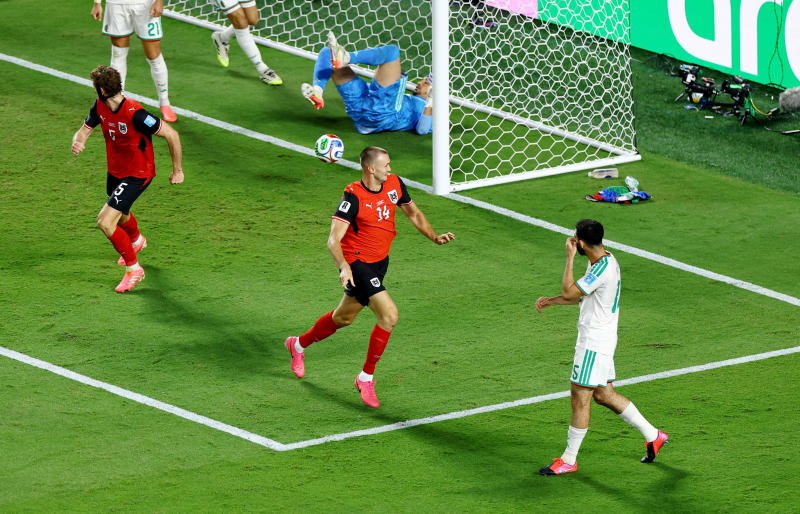
Alas, Austria scored a miracle tying goal in the final moments of stoppage time three minutes later to reclaim second place in their group and the automatic bid in the Knockout Stage. I did look closely at the replay to discern if there was a chance that the Algerian goalkeeper let the goal in to play some nine-dimensional chess since the draw gave them the supposed more desirable third-place spot in the bracket that avoids Spain. The keeper’s effort looked sincere and genuine to me. I think he just got beat, rather than faking it and playing nine-dimensional chess.
Best of luck — Frank.
Here was the deal: if both teams earn a draw, then they both advance — so there was the potential of a replay of the “Disgrace of Gijon” scenario when West Germany defeated Austria by a 1-0 score in the 1982 World Cup, where both sides essentially stopped trying to score since that result got both teams into the Knockout Stage (and, coincidentally, eliminated Algeria from the Knockout Stage). In theory, that could happen in this match — so a nil-nil result was on the table. There was some nine-dimensional chess going on where some pundits were guessing that neither side wanted to finish in second place, since that placed them in the bracket where Spain is potentially awaiting them in the Round of 32. And with Congo’s victory in the second slate of matches that day, Iran was clinging to the final third-place Knockout Stage spot with three points and a zero net goal differential — meaning a loss for either team here eliminates them from the tournament.
It presented a pure example of the Prisoner’s Dilemma. Both teams benefit from agreeing to the draw, but because one side could decide to increase their odds of reaching the Knockout Stage by scoring a goal (and avoid the disaster of losing the game), neither of these teams could trust each other to act in their mutual interest. Like the two criminals in separate boxes at the police department, while shutting up is in their collective interest, each person would be incentivized to cut a deal to lessen the worst-case scenario of the potential police charges — and the odds of someone blinking and making a deal increase since only the first person who does this will be rewarded with the lesser charges.
There was always a fatal flaw to this logic: Austria remained in second place in Group J with a draw — and while a one-goal loss to Algeria tonight could drop them to this coveted third place slot to dodge Spain in the Round of 32 (before the Congo win in the match prior), if they then conceded a second goal, then their -2 net goal differential would place them out of the Knockout Stage completely! Iran currently takes the eighth and final third-place slot in the Knockout Stage with three points and a -1 net goal differential -- so a two-goal loss eliminates Austria. And if you want to play nine-dimensional chess, if Algeria would suddenly want to surrender a goal (up 1-0) to drop back to third place, then my new expensive Artificial Intelligence calculator tells me that would be two combined goals which cashes the Over — which was what I was invested in with my money and endorsing for Hollywood Sports.
Perhaps the lower 1.5 over/under set by the books was a reaction to Austria only generating 0.53 expected Goals (xG) when getting blanked by Argentina? I was not going to overreact to a team struggling to score against the reigning World Cup champions who deployed a defensive low-block formation after taking a lead in the first half. Das Boot had produced a healthy five Big Chances (shots with at least a 35% expected goal probability) in their two matches. Led by manager Ralf Rangnick, this squad employs the prototypical aggressive style of professional Red Bull squads. This means vertical dynamism with a high press, quick transitions, constantly pushing forward, and quick shot-taking. This style is consistent with the type of play most of the players on the roster conduct with their professional teams. Many of the Austrian players are employed professionally in the German top-flight Bundesliga. Several players star for either RB Leipzig or Red Bull Salzburg in the Austrian top flight. Cohesion is an advantage this team will have in this event. Unsere Burschen came into the World Cup with 1-0 victories against Tunisia and South Korea in their last two friendlies, two opponents that are competing in this event — and if they take a 1-0 lead tonight, then Algeria will have to throw caution to the wind since a loss eliminates them from the Knockout Stage. This style of play can lead to blowouts, as Ghana found out in a 5-1 loss to Das Team in a friendly back on March 27th. In their eight matches in the World Cup qualifying stage, they scored 22 goals. Even when dismissing their 10-0 stomping of San Marino, scoring an additional 12 goals in those other seven matches is impressive.
Rangnick has revived this national program since taking over in January of 2022. Austria was the surprise of the 2024 Euro Championship when they took first place in their group despite it being loaded with both France and the Netherlands. This is their first appearance in the World Cup since 1998 — another reason why Rangnick is not going to risk some nine-dimensional chess and settle for a draw, since a two-goal loss would be a national humiliation on the scale of the Steve Bartman/Chicago Cubs incident — and this group is well-tested on the international stage. They scored three goals apiece against the defensive-minded Poland squad and the Netherlands in the 2024 Euro before suffering a 2-1 loss against Türkiye in the Round of 16.
On the Algeria side of the equation, they played on their front foot against Jordan with 17 shots, eight of which were on target. They also had three Big Chances. One problem for the Desert Foxes is that their keeper, Luca Zidane, has been shaky in both matches. He may not be able to be trusted in a “no one scores, wink-wink” scenario.
If Algeria could get Austria to settle for a scoreless draw, they would take that deal — but why would Das Boot take that deal since it does not help them (other than ensure they do not lose by two goals)? Was it theoretically possible that there would be 90 minutes of zero activity? Yes. Was it likely? I just did not think so — especially for two teams whose goal was to just make the Knockout Stage, with a deep run a distant dream. Punting for a scoreless draw significantly damages the glory of the achievement.
When Rangnick was asked the day before if he would instruct his players to simply settle for the nil-nil draw, he replied: “No, definitely not. Once we start, we will know, but it will not influence our match. ... If we have a draw tomorrow, we can go on, but we cannot go into a match and just say, 'We'll play for a draw.'" Added Austria midfielder Konrad Laimer: "We go out, we want to win the game. It doesn't matter who we face.” Laimer makes a good point because the third-place round sees Switzerland in the Round of 32, then potentially Portugal or Colombia in the Round of 16 (depending on which team takes first place in Group K). Is it really worth it to be underdogs in all those scenarios to avoid being an underdog against Spain? Come on, it was already Austria once that was tarnished with the Disgrace of Gijon! Are they now going to do it again? I was so skeptical.
Here’s what Algeria manager Vladimir Petkovic said about all this: "There is no 'if' or 'but' in football, we have to face our opponents always the same way, with a strong desire to perform well and a great will to win. We'll see what happens after the match, but to advance and realize our ambitions we must first earn it by trying to win the game." Of course, all these guys could be lying and saying the right thing to the media. The bottom line is that even if both teams try to lose their honor by playing for the scoreless draw, if one player even accidentally scores, then all proverbial bets are off since the other side will immediately become desperate to score.
I will admit, after watching the first 25 minutes of this match, I was growing increasingly frustrated that perhaps both these two were going for the Prisoner’s Dilemma dream scenario by pragmatically avoiding anything risky. I had to turn the channel. And as that “strategic” decision tends to do, the karma changed as Austria scored three minutes later. If there was wink-wink monkey business going on, it was not ancient history since Algeria now had to play with desperation since a loss would then end their tournament. The Desert Foxes evened the score a goal just before halftime, so potential agony became ecstasy as we cashed our 25* World Cup Group J Total of the Year with the Over.
Then, in a fascinating twist late in the match, we were witness to one final example of the frailty of the Prisoner’s Dilemma. After Austria took a 2-1 lead in the 55th minute, Algeria evened the score again five minutes later. For most of the final 30 minutes of this match, both teams looked resigned to settle for the positive results both would enjoy from the draw. But then the Desert Foxes demonstrated why their nickname is appropriate as former Leicester City and Manchester City star Riyad Mahrez could not pass up a great scoring chance in the third minute of stoppage time— so he took advantage to register the goal and all-but cement Algeria’s spot in the Knockout Stage. Why do it? Because in the three minutes left in the match, Austria could decide to do it and break their hearts — especially since Das Boot had no disincentive to not score at that point, if given the easy chance (after the Congo result earlier in the day, it was second place or bust as their only two options regarding the Knockout Stage). So for a few moments, it looked like Austria’s hearts would be broken — and an Iran team required by the US State Department to enter and then exit their matches in the United States on match day given the continuing international tensions — would have claimed the eighth and final third place spot in the Knockout Stage.
Alas, Austria scored a miracle tying goal in the final moments of stoppage time three minutes later to reclaim second place in their group and the automatic bid in the Knockout Stage. I did look closely at the replay to discern if there was a chance that the Algerian goalkeeper let the goal in to play some nine-dimensional chess since the draw gave them the supposed more desirable third-place spot in the bracket that avoids Spain. The keeper’s effort looked sincere and genuine to me. I think he just got beat, rather than faking it and playing nine-dimensional chess.
Best of luck — Frank.
