by Hollywood Sports
Tuesday, Sep 02, 2025For the 15th straight summer, I invested time researching each NFL team to serve as the foundation for my handicapping in the fall and winter. What initially began as basic notetaking on some fundamental details for each team has become an arduous and detailed process for each team that derives from the reading and studying of multiple sources. Each NFL team now takes about two hours of preparation time as I add sources to my foundational work.
To help document this work while crystallizing my thoughts for each team, I am providing a summary of each team highlighted by a critical question that will go a long way in their success or failure. Here is the AFC.
BALTIMORE RAVENS: The Ravens offense continued to hum in the second season under offensive coordinator Todd Monken. The addition of running back Derrick Henry proved inspired since he presented opposing defenses the no-win dilemma of either attempting to stop him or quarterback Lamar Jackson in Run-Pass-Option plays. Henry rushed for 1921 yards on 5.9 Yards-Per-Carry — and his +562 rushing yards above expected rushing yards led the NFL. Jackson added another 915 rushing yards — and Baltimore led the NFL in both Expected Points Added per rushing attempt and by generating 187.6 rushing Yards-Per-Game. Jackson continued to improve in the passing game by demonstrating more patience in the pocket and finding wide-open receivers on his second or third look. His 4172 passing yards, along with a 119.6 Passer Rating, were career highs. He threw 41 touchdown passes and tossed just four interceptions. This offense led the league in Yards-Per-Attempt in the passing game. On the other side of the ball, there were some early stumbles for first-year defensive coordinator Zachary Orr, which I expected given the brain drain from the coaching staff in the offseason. After surrendering 359 passing yards to Joe Burrow in Week 10 (with Ja’Marr Chase on the receiving end of 264 of those yards), changes were made. Head coach John Harbaugh brought back Dean Pees out of retirement (again) to serve as a special consultant. Safety Kyle Hamilton moved from playing close to the line of scrimmage to taking on a traditional free safety role pre-snap before the defense would make their now typical post-snap schematic realignments as they have been doing the last three years with Matt Macdonald and Jesse Minter as their defensive coordinators. Free safety Marcus Williams got replaced by strong safety Ar’Darius Williams in the secondary. The results were dramatically better. Ignore that Baltimore ranked second-to-last in the NFL by giving up 244.1 passing YPG. After that game against Cincinnati, the Ravens ranked second in the league in Defensive DVOA using the Football Outsiders’ metrics. They also led the league with the fewest PPG allowed and fewest Yards-Per-Play allowed in those final eight weeks of the regular season. Taking away the deep-threat forced opposing offenses to settle for shorter passes — they allowed the linebackers to play more of a role in shutting down the passing game. More importantly, the better pass coverage helps a pass rush that ended the regular season with the second-most sacks in the league. With a year under his belt, Orr should be more comfortable calling the defense -- and Pees remains involved to offer his wisdom. Williams suffered a torn ACL in May minicamp, but the team probably got a steal in the first round of the draft with Georgia safety Malaki Starks, who shares similar positional flexibility as Hamilton. But for a team that won the overall DVOA regular season championship for the third time since 2019, the biggest question remains whether or not they can get over the hump in their journey through the suffering of learning how to win in the postseason. Jackson played better in last year’s playoffs — but untimely mistakes and some bad luck continue to haunt this team. After losing wide receiver Zac Flowers to injury for the playoffs (the guy who fumbled at the goal-line in their previous playoff loss), Baltimore committed three turnovers and veteran tight end Mark Andrews made two costly plays in the second half — most notably dropping a pass from Jackson right in the bread basket which would converted a late two-point conversion. That gaffe ends up being the difference in a 27-25 loss at Buffalo. And so it continues. The Ravens are certainly not the first professional franchise put through the emotional ringer of suffering heartbreak after heartbreak before finally breaking through. They are going to have to start making their own luck. They did not force a turnover in either playoff game last season (and after forcing 31 takeaways in 2023-24, that only generated 17 turnovers last year). They need to avoid another 0-2 start in a mission to claim home-field advantage. And after perhaps their healthiest season ever under Harbaugh, they need to hope their fortunes with avoiding the injury bug continue.
BUFFALO BILLS: Many observers thought the Bills were destined to take a step back last season after saying goodbye to wide receiver Stefon Diggs. I disagreed because I like the increased reliance on the run game once Joe Brady took over at offensive coordinator for Ken Dorsey late last season. In my deep dive last year, I wrote: “Relying less on quarterback Josh Allen’s arm may reduce his league-leading 47 interceptions in the last three seasons.” Sure enough, Allen only threw six interceptions all season — and his eight turnovers (accounting for two lost fumbles) were the only giveaways the offense experienced all season. That is spectacular. It is also unsustainable. Not making those mistakes — and Allen taking only 14 sacks all season — helped the offense rank second in the NFL by scoring 30.9 Points-Per-Game. They reached the 30-point plateau 13 times while scoring at least 27 points 15 times and getting to 40 or more points three times. Even with some regression in the turnover department, the offense should remain explosive. The outstanding offensive line remains intact. A common criticism is that Buffalo lacks the prototype WR1 target, but the balance (and lack of drama) from the array of targets may be just what Allen needs to thrive. And there are reasons for optimism. Both Khalil Shakir and tight end Dalton Kinked played through injury. Second-year wide out Keon Coleman should continue to grow. The bigger problem is on the other side of the ball with a defense that had its most inefficient season since 2020. The Bills were not bad on defense — they ranked tied for 11th by holding their opponents to 21.6 PPG. On the other hand, they only outgained their opponents by +17.6 net Yards-Per-Game which is not commensurate with their 13-4 record in the regular season. They transcended that mark by forcing 32 turnovers, which is another unsustainable metric. But they were 29th on 3rd Downs and 22nd in Expected Points Allowed per Pass Attempt. They surrendered the fifth-most Air Yards in the passing game. General manager Brandon Beane knows the problem and targeted the defense with his first five draft picks and six of his top seven selections in the NFL draft last April, focusing on cornerback, defensive tackles, and edge rushers. Getting Matt Milano healthy again at linebacker should help. Buffalo has been an elite team for five straight seasons — but it is their defense that is holding them back. In their 12 playoff games since 2020, they are surrendering 24.2 PPG — and in their five losses, they have given up 33.2 PPG. Patrick Mahomes and the Kansas City Chiefs remain the white whale to overcome for this franchise — their season has ended in the postseason with a loss to them four times in the Allen era. Improving the defense will help Allen succeed — and seizing home-field advantage in the playoffs would be a good idea as well.
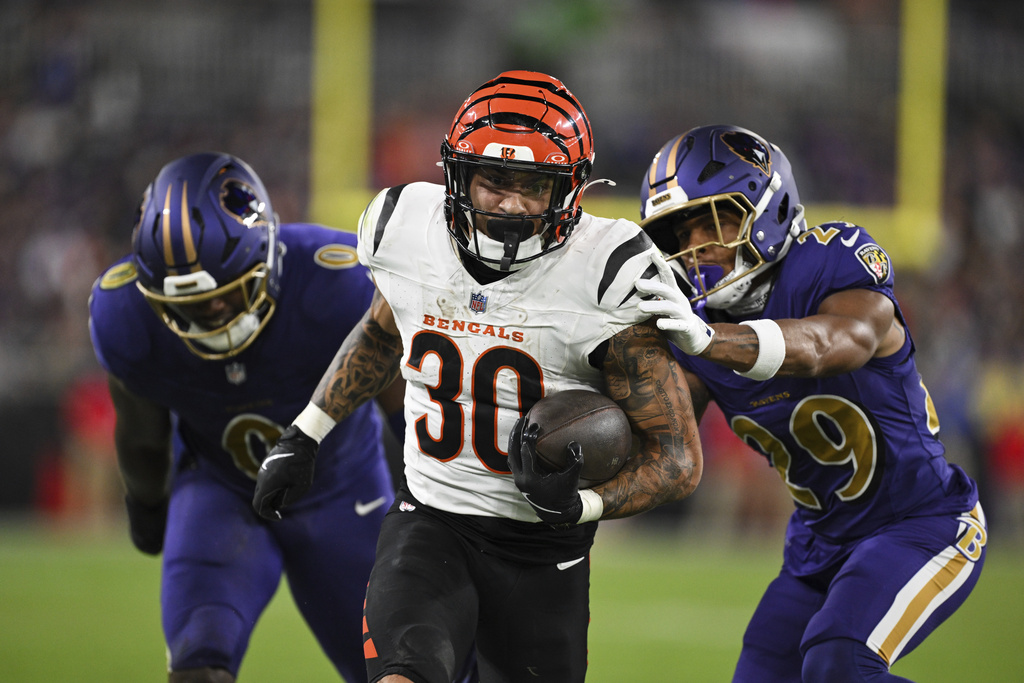
CINCINNATI BENGALS: It does not take a rocket scientist to discover that it is the play of the Bengals' defense that is holding them back. Cincinnati lost four games where they scored at least 33 points — and despite scoring 25 or more points 11 times, they posted a 5-6 record in those contests. Management decided to blame Lou Anarumo for the failures of the defense. He is well-respected in NFL circles — and he was the one who began deploying the two-high safety scheme to success against the Kansas City Chiefs in the second half of their AFC Championship Game back in 2023 that continued to stymie Mahomes for much of the 2023-24 season. But his schemes are complicated — and they may need elite player-coaches on the field like safety Jessie Bates III to implement and execute his ideas. Unquestionably, letting Bates go in free agency the next offseason was a mistake. Anarumo simplified some of his concepts late in the year — not only did the Bengals win their final five games to finish 9-8, but many players on defense were more effective (especially starting free safety Geno Stone). But the writing was on the wall, and Cincinnati parted ways with Anarumo to hire Notre Dame defensive coordinator Al Golden. It’s a good hire. He had previously served as the linebackers coach for the Bengals in 2020-21 before taking the gig with the Fighting Irish, running their defense in 2022. After establishing his bona fides as a linebackers coach, he served as the head coach for Temple from 2006 to 2010 before taking over running the Miami (FL) Hurricanes from 2011 to 2015. After he lost that job, I like that he went back to the NFL and coached on the other side of the ball as the tight ends coach for Detroit for a year before moving back to linebackers the next year. That tells me he is well-respected and a teacher at heart, given his willingness to learn a new assignment. He oversaw some great defenses at Notre Dame. The hope is that his attention to detail regarding fundamentals and player development with the Irish can translate to the NFL level with a Bengals defense desperate to tackle better and force more turnovers. My fundamental question with this team is whether “Blame Lou” is simply whitewashing the true critique to Blame Duke. Director of Player Personnel Duke Tobin has drafted ten players in the first three rounds of the NFL draft since 2022. Yet players like defensive linemen Kris Jenkins and Myles Murphy, along with defensive backs Cam Taylor-Britt, D.J. Turner II, Dax Hill, and Jordan Battle have either underachieved or looked like outright busts entering the new season. Perhaps Golden can unleash their potential. But he is a first-time defensive coordinator — and his fondness for linebackers may not match the modern NFL that often devalues that position in terms of drafting and the paying of second contracts. Tobin drafted two rookies in the first four rounds at linebacker while signing Will linebacker Oren Burks in free agency from Philadelphia. With so much money now locked into quarterback Joe Burrow’s second contract that kicked in this year, along with the retention of wide receivers Ja’Marr Chase and Tee Higgins, perhaps banking on a defensive coordinator with a strong reputation in college for developing players was the shrewd decision. But that is no guarantee that Cincinnati will snap their two-year playoff drought.
CLEVELAND BROWNS: The Browns had a 6-2 record in games decided by four points or less two years ago. It was hard to expect that level of success in winning close games once again last season — especially with the team handcuffed to Deshaun Watson and his large contract as the answer at quarterback. It was not difficult to see how things fell apart. Sure enough, Watson posted the lowest DVOA passer rating in franchise history before suffering a second major Achilles’ injury that ended his season. Cleveland lost their final six games of the year and limped to a 3-14 record. Watson has probably played his last game with the organization — and head coach Kevin Stefanski and Andrew Barry are on the hot seat in their sixth year with the team in a litmus season where they will have to prove they have a plan to get out of the salary cap nightmare paying a sex offender $230 million in guaranteed money can create. But given all that, the Browns are probably going to be undervalued this season, relative to point spread expectations. Stefanski got rid of first-year offensive coordinator Ken Dorsey. Promoting tight ends coach Tommy Rees, who had previously served as the offensive coordinator for Alabama and Notre Dame, is probably a step in the right direction since his principles are closer in line with Stefanski’s vision. Cleveland is going to run the ball more — and they are returning to wide zone blocking schemes from a couple of years ago. I write this in late July with no idea who is going to be under center at quarterback. Regardless, the Browns are going to run the ball more, play conservatively, attempt to limit mistakes, and lean on their defense, which was outstanding two seasons ago. The Browns were last in scoring last year by averaging only 15.2 Points-Per-Game. But they only got outgained by -41.3 net Yards-Per-Game. An NFL-worst -22 net turnover margin was too much to overcome. After forcing 28 turnovers two years ago, defensive coordinator Jim Schwartz’s defense only had 12 takeaways last year. That should improve, as should their pass defense, which fell to the bottom-five in the Football Outsiders Pass DVOA metrics last season after ranking 12th two years ago. The defensive backfield core of cornerbacks Denzel Ward, Martin Emerson Jr., and Greg Newsome II, along with strong safety Grant Delpit, remains from two years ago. Don’t underestimate the impact of losing linebacker Jeremiah Owusu-Koramoah to a season-ending neck injury on October 27th. While he may never play again, at least Berry had the offseason to add Jerome Baker in free agency from Tennessee and draft Carson Schwesinger in the second round from UCLA to bolster the linebacker room. All-Pro Myles Garrett was resigned to the biggest non-QB contract in the history of the NFL — and they drafted defensive tackle Mason Graham from the University of Michigan with the fifth pick, who is a a stout run defender as well as someone who can generate a pass rush from the inside. Schwartz could have another great defense on his hands, which would make the Browns an under-the-radar team.
DENVER BRONCOS: I was skeptical about the Broncos heading into last season. I was hesitant to read too much into the team’s 7-4 finish that resulted in a respectable 8-9 final record. Four of their wins were by three points or fewer (and eight combined points), with a midseason five-game winning streak fueled by forcing 16 turnovers during that span. The Broncos led the NFL with 15 fumble recoveries, which is some turnover good fortune reminiscent of Payton’s Super Bowl run with New Orleans in 2010. That level of turnover success — nor a trip back to the Super Bowl — occurred again for Payton in the Big Easy. Denver got outscored by -3.3 Points-Per-Game and outgained by -71.4 net Yards-Per-Game in Payton’s first year in Denver. So it is from that perspective that I concede what a fantastic job Payton did last year in getting the Broncos into the playoffs with a 10-7 record. He proved his doubters wrong with his faith and then development of rookie quarterback Bo Nix. After understandably stumbling out of the gate, Nix won nine of his last 14 starts while completing 67.2% of his passes with 29 touchdown passes, only eight interceptions, and a Passer Rating of 101.2. Payton has done an outstanding job forging together what has become one of the best offensive lines in the NFL. Denver was fourth in Adjusted Sack Rate Allowed — and the pressure rate on just 24.9% of Nix’s dropbacks was the second lowest mark in the league. This unit also led the NFL in Run Block Win Rate, which sent a strong message that the team’s failures to average more than 112.2 rushing YPG were due to the talent in the running back room. The team did not re-sign running back Javonte Williams and selected Florida’s R.J. Harvey in the second round. The other side of the ball was even better as they limited their opponents to 317.1 total YPG, which resulted in 18.3 Points-Per-Game, ranking seventh and third in the league. Defensive coordinator Vance Joseph’s aggressive approach helped the Broncos lead the NFL with 63 sacks. They led the league in Adjusted Sack Rate and were second in Pressure Rate. Defensive end Zach Allen and linebacker Nik Bonitto were both second-team All-Pros. Cornerback Pat Surtain II was the recipient of the Defensive Player of the Year award. General manager George Paton then improved the spine of the team by signing free safety Talanoa Hufanga and linebacker Dre Greenlaw in free agency. Adding those key pieces from the San Francisco defense and getting linebacker Alex Singleton back from his torn ACL injury should make this unit even better. Paton also drafted cornerback Jahdae Barron from Texas in the first round to improve an already elite secondary. That all said, were last year’s results indicative of the trajectory of this team — or did it demonstrate what great coaching and a soft schedule can accomplish? Denver only outgained their opponents by +7.5 net YPG. They once again won the turnover battle with a +6 net turnover margin, tied for tenth best in the league. They went 4-0 versus the NFC South and added victories against the New York Jets, Cleveland, and Indianapolis. Their 38-0 victory in Week 17 against Kansas City was a game where they rested their starters. Even with that result, the Broncos ranked last in total defense in December — and they surrendered 30 or more points in four of their last six games (including that shutout against the Chiefs’ second-stringers). They got exposed in their 31-7 loss at Buffalo in the AFC wild card round in a result that was eerily similar to their 41-10 blowout loss at Baltimore on November 3rd. Which brings things back to Nix. Were his good numbers simply a result of Payton’s offensive genius? Having a good head coach who does not make decisions that dig holes for his team really helps. Nix ranked 10th in the league in the Football Outsiders DVOA metrics when playing with a lead. In one-score games, he dropped to 15th in DVOA. But when he was playing from behind (and in more obvious pass situations, given the need to score), his DVOA ranking dropped to 30th. On second-and-long or third-and-long, he ranked 19th in DVOA. His play deteriorated significantly against better defenses. DVOA measures defensive stats in relation to league averages — so a negative final number indicates a defense that was better than the average NFL defense. Denver scored only 14.3 PPG against these above-average defenses with a negative DVOA number. Against below-average defenses with a positive DVOA, the Broncos score 29.5 PPG. That is a major red flag suggesting that this was an offense that thrived against bad defenses and that Nix’s best moments were during positive game scripts when Payton could dial up pass plays when the defense had to respect the Denver rushing attack. Usually, the Broncos’ 1-6 record in games decided by one-scoring possession would be something I would expect to even out over time by the Regression Gods. However, it needs to be considered that the -5 net close losses illustrate Nix’s ineffectiveness in those situations.
HOUSTON TEXANS: I have two concerns about the Texans: their offensive line and their drafting philosophy. Both of these critiques have a common denominator in general manager Nick Caserio, whom I have always been neutral on before my discoveries in this deep dive on a quiet (but hot) summer night in Las Vegas at the end of July. First is the offensive line, the unit where Caserio invested $52.3 million last season, the sixth most in the NFL. That group had an Adjusted Sack Rate of 9.1% of their dropback passes, as compared to their 7.8% Adjusted Sack Rate in 2023-24. Quarterback C.J. Stroud enjoyed a clean pocket in only 59% of his dropbacks, ranking second-to-last (just above Deshaun Watson) for qualifying quarterbacks. Granted, three starters are gone from that group, including left tackle Laremy Tunsil, who Caserio traded to Washington. He struggled with run blocking. There were red flags on left guard Kenyon Green. Paying Shaq Mason may not be prudent. But who are the replacements? Cam Robinson was signed from Minnesota at left tackle. Jacksonville benched him midseason, before trading him to the Vikings. He leads a pack of free agent signees that are classic retreads, with the only variation being either (a) wait until you see them return to form recovering from injury, or (b) maybe a new environment can get the remaining fuel out of his tank. These are low-end band aids solutions to what was a bad offensive line last year. Caserio did draft left tackle Airenotae Ersery in the second round of the draft, so perhaps he ends up in the mix, which segues into my draft rant. When I watch the NFL draft in April, most of my attention is on the start of the NBA and NHL playoffs. It takes the July deep dive for me to really contemplate the implications of those draft-day moves. I was struck that Caserio felt it desirable to take both wide receivers from Iowa State in the first three rounds. Quite an endorsement for a Cyclones offense that scored just 19 points in their 25-point loss to Arizona State in the Big 12 championship game. But, OK, a team’s draft board is their draft board — so if Jaylin Noel is available in the third round after nabbing Jayden Higgs in the second round, you do it. But then, Caserio drafted two USC players in a row? And all of his nine draft picks came from Power Four conference schools. That rang some bells, reminding me of Jacksonville general manager Trent Baalke, who picked 12 of 13 players from Power Five conference teams in the 2024 draft. In 2024, Caserio also went nine for nine in selecting Power Four conference teams, including another two from that powerhouse USC program (both on defense, mind you, but at least one of the two 2025 picks from USC was an offensive player). OK, now I’m intrigued. In 2023, Caserio only drafted eight of his nine players from Power Five conferences because Notre Dame is an independent. He nabbed two from Alabama in that draft. At this point, I’m Freamon from The Wire. In 2022, Caserio drafted all nine of his players from Power Five conferences, including two from Alabama and two from LSU. With bated breath, I went to his first year as the Texans’ GM after serving as the Personnel Director for Bill Belichick for 13 seasons. With only five picks in the draft (after, admittedly, trading fourth and fifth round picks for the third round pick on wide receiver Nico Collins, although the advice of passing game coordinator Pep Hamilton, who coached Collins at Michigan), Caserio chose five players from Power Five conference programs. To summarize, Caserio has made 41 draft picks — and 40 of those 41 selections were from Power Four or Five conferences, with the lone exception being a player from Notre Dame (who do not play in a conference as an independent). Simply spectacular. Granted, I get it: the better athletes play at Power Four/Five conference schools. But so do the other 31 teams in the NFL get that too? It’s not a secret. In an NFL where players like Maxx Crosby and Bobby Wagner came from non-Power Five conference schools, not taking more chances on those players seems like missing opportunities for high-end returns. And then to compound matters, Caserio made this statement when responding to criticism that he did not do enough to fortify the offensive line in last April’s draft: “The whole perception, well, you need this position, you need that position, I mean, that’s made up, we don’t approach it that way. … This whole concept of drafting for need, honest to God, I don’t even know what it means.” Honestly, FFS. It means when your quarterback got sacked 52 times last year and took a step back in his sophomore season, you try to fix that problem — and then you use the nonsense cliches to justify your decisions (see Bull Durham). Even Baalke would watch enough Thursday Night Football on ESPN to find the occasional left tackle from Appalachian State. Even the reigning king of TV scouting, former Las Vegas Raiders GM and Jon Gruden yes-man Mike Mayock, flexed his Saturday scouting regimen by watching SportsCenter at night to discover some hotshot from a Group of Five school to pick after reaching for Clemson talent in the first round. But we have a new undisputed champion! To not ever find the moment to draft an underrated Group of Five or, dare I say it, an FCS player, even once out of 41 draft picks in five seasons is an incredible commitment to the scouting primarily from the traditional networks on Saturdays during the football season regimen. Even a monkey randomly jabbing at the keyboard would take a stab at a North Dakota State player, and that 100th monkey might even uncover Jerry Rice. But San Francisco was drafting for need that year, those idiots. OK, rant done. Caserio’s AFC South champion team scored and allowed 21.9 Points-Per-Game last year despite their 10-7 regular season record. They only outgained their opponents by +4.7 net Yards-Per-Game. They were 7-5 in games decided by one scoring possession. They overachieved their PPG and YPG numbers with a +10 net turnover margin. The defense does look good with depth on the defensive line and perhaps the best secondary in the league. That unit ranked third in the Football Outsiders Defensive DVOA rankings. Caserio had holes to address in the wide receiver room after not resigning Stefon Diggs (which was fine) and the unfortunate knee injury to Tank Dell — but he found the solution on a 3:30 PM ET game one Saturday afternoon when Iowa State was on since he drafted both of their wide receivers (USC might have had a prime time game at home later that night since Caserio chose his third Trojan player in the last two seasons from the stout Lincoln Riley defenses). But it all comes back to the offensive line. Unfortunately for Stroud, Caserio’s board simply never pointed back to another offensive lineman. But, hey, look at the value of Graham Mertz in the sixth round. The injured quarterback could really develop into a decent backup quarterback in the league in a couple of years after recovering from the season-ending knee injury last October. He was the top guy on Caserio’s board at the time. Besides, how often do sixth-round draft choices on the offensive line get on the field (Answer: often)? I did not realize how appalled I would be with this deep dive. Well, Caserio is not the first guy to steal money from this ownership.
INDIANAPOLIS COLTS: The Colts begin the post-Jim Irsay era with many people on the hot seat. That appeared to be the case before their owner passed away in May. His three daughters have taken over running the team. Indianapolis has not made the playoffs since 2020 -- and their last postseason victory was in 2018. If that trend continues, one would think that general manager Chris Ballard would be relieved of his duties and a new GM would replace Shane Steichen with their own choice at head coach. Ballard drafting lately has produced some solid starters along with some flops — but not many home runs. The result is a team that has gone 17-17 in the two seasons under Steichen after last year’s 8-9 record. The Colts benefited from an 8-5 record in games decided by one scoring possession. They got outscored by -2.9 Points-Per-Game and got outgained by -26.4 net Yards-Per-Game. My biggest question regarding this team last year was how good the supporting cast was for second-year quarterback Anthony Richardson. I think the answer was “meh.” Jonathan Taylor is one of the best running backs in the league. Left guard Quenton Nelson was a second-team All-Pro. Defensive tackle DeForest Buckner remains a force. Ballard got out the checkbook in the offseason by spending big money for the secondary by signing free agents Charvarius Ward and Cam Bynum. Adding tight end Tyler Warren in the first round of the NFL draft and then defensive tackle J.T. Tuimoloau in the second round seems like great additions. But is it enough? I like the hire of Lou Anarumo as defensive coordinator. But this was a unit that ranked 29th in the league by surrendering 361.2 YPG, with an equal opportunity group that ranked 24th against the run and 26th against the pass. How much better will the play at quarterback need to be to elevate this group? This is certainly Richardson’s last opportunity to demonstrate he can be a professional quarterback for this team. His big arm, speed as a runner, and huge 6’4 frame are tantalizing. And he has only played in 28 career games in the NFL and in college. But he completed only 47.7% of his passes while throwing 12 interceptions and only eight touchdown passes. He got benched for two games for his lack of game-week preparation. Ballard signed Daniel Jones as a free agent to challenge Richardson for the starting job. Does either quarterback have it in them to step up?
JACKSONVILLE JAGUARS: The Jaguars are a trendy bounce-back team in some circles this season after a disappointing 4-13 campaign last year resulted in both third-year head coach Doug Pederson and a fifth-year general manager, Trent Baalke, getting canned. I applaud the latter move. As I observed in my deep dive on this team last year: Baalke drafts “NFL talent as if wakes up at 3 PM ET just in time for the national CBS-TV game featuring the SEC. Baalke had nine draft picks last April — and seven of those players came from SEC programs (three from LSU!). The non-SEC players came from the Big 12, which may be a result of commercial breaks when he turned on a random game on ABC-TV or ESPN … In 2023, 12 of Baalke’s 13 draft picks came from Power Five conference teams, with the exception of the offensive tackle he drafted from Appalachian State, which may be a result of a Thursday Night ESPN viewing. In 2022, five of his seven picks were from Power Five Conferences. In 2021, in his inaugural season with new head coach Urban Meyer, who was going to tear up the NFL like he did the SEC and Big Ten, he drafted another eight of nine players from Power Five conference schools.” Jacksonville lost 10 of their 13 games decided by one scoring possession last season — so winning more of those games gets them back into the AFC playoff hunt. Ranking 29th in the league with a -15 net turnover margin did not help matters. The Jaguars forced only nine turnovers last season in what was just the second time in NFL history since moving to the 17 game schedule that a team did not have double-digit takeaways. The reasons to expect the Regression Gods to appear and help this team this season are sound. But I’m more skeptical than others. The turnover mess does not explain away that Jacksonville got outscored by -6.8 Points-Per-Game and outgained by -83.7 net Yards-Per-Game. Quarterback Trevor Lawrence has not lived up to his high expectations in his four seasons, with the biggest critique being that he simply lacks the fire in his belly to be great in this league. The offensive line is mediocre, at best. The defense was second to last in the league by surrendering 389.9 total YPG. That unit was hampered by a pass defense that was last in the NFL by giving up 257.4 passing YPG — and they were also last in the league in Expected Points Allowed per Dropback. They generated only 34 sacks last season, the fifth-least in the league. I don’t think it's a great roster after years of Baalke’s lazy drafting. Which then segues into the new brain trust. Owner Shahid Khan checked the requisite boxes by hiring an offensive coach who has experience sitting at Sean McVay’s lunch table by tapping Tampa Bay offensive coordinator Liam Coen as his new head coach. And Khan gave the guy with just one year of play-calling experience the keys to the entire enterprise since sacking Baalke appeared to be a prerequisite for considering the job. The 39-year-old signed off on hiring the Los Angeles Rams Director of Scouting Strategy, James Gladstone, as the new general manager. Kudos on the 34-year-old for only selecting one player from the SEC in the April draft (and he even drafted two players that do not play for a Power Four conference school or Notre Dame!). But Coen also named the 29-year-old Grant Vdinski as his offensive coordinator and elder statesman, 42-year-old Anthony Campanile as his defensive coordinator — and what they both have in common is that they have never called plays before. This clan of Millennials (outside of Campanile, who sneaks in as a technical Gen-Xer) all have less than five years of experience in the NFL. I’m all for getting rid of moving on from the Baby Boomer generation (especially the octogenarians clinging to their power) — so I appreciate the benefits of the infusion of new blood and ideas. But this amount of inexperience often leads to some growing pains. I was worried about first-time head coach Nathaniel Hackett tapping first-time coordinators when taking over the Denver Broncos three years ago — and we all know how that turned out (and Tennessee had a rookie head coach calling plays the first time alongside rookie offensive and defensive coordinators last season — and they went 3-14). I like Coen better than I did Hackett — and all these new faces come from the McVay coaching tree. However, even McVay, after winning the Super Bowl, has had his challenges and mishaps in developing as a head coach. In the NFL, it does not take much for things to go sideways. And then there is the plan to use rookie Travis Hunter both sides of the ball as he did in college. I’m skeptical this can work — especially as I listen to more NFL lifers discuss the unique challenges of being a full-time player on both sides of the football. Logistically, it has to be picked and choose which meetings Hunter attends since they occur simultaneously. Then there is the concern that opposing offenses can wear him out simply by requiring him to defend deep passing routes play after play after play. It’s one thing to be a full-time player at Colorado, it’s quite another to do it in the NFL. That’s why it is rarely done in the history of the league. This is no indictment’s of Hunter’s talent, but this is not a superhero movie. Finally, if there was a way to be clever about how to maximize Hunter’s snaps on both sides of the football, I don’t think the brain trust assembled in Jacksonville has the experience to unlock it.
KANSAS CITY CHIEFS: I backed the Chiefs in the Super Bowl last February — so I sure got that one wrong. They entered that game with a 12-0 record in games decided by one-scoring possession. There was a lot of griping about how lucky they had been during the year. And while they definitely got some good breaks along the way, they also play smarter than most teams — and that helps them take calculated risks at the right time, avoid mistakes, and execute the little things that pull out close games. With a brain trust of head coach Andy Reid and defensive coordinator Steve Spagnuolo, and then future Hall of Famers, Patrick Mahomes and Travis Kelce, leading the offense, banking on them to figure out ways to win games is going to be a very profitable endeavor. Certainly, getting good breaks plays a role, yet I am very interested in the deeper analytics in football and basketball, delving into the topic that winning close games is, in fact, often a skill. If you think Mahomes' four fourth-quarter comebacks and seven game-winning drives were just a product of luck, then tell it to Tom Brady. Or Michael Jordan. That all said, Kansas City was certainly exposed by the Philadelphia Eagles in the Super Bowl. The problems at tackle on the offensive line were evident all season — for several years, in fact, since not re-signing left tackle Orlando Brown — yet the Chiefs kept on winning two Super Bowls in a row and then 17 of their first 19 games last year. Not only did the Eagles' rotation of pass rushers make Mahomes look silly, but the Philly offense carved up the interior of the Kansas City defensive line. Reid and general manager Brett Veach attacked the offensive line problem in the offseason. They signed left tackle Jaylon Moore from San Francisco, who has spent the past few seasons serving as the understudy to future Hall of Famer Trent Williams. He has not been a full-time starter in the league, but he brings promise after being responsible for only five sacks in 446 dropbacks. Veach then drafted Ohio State left tackle Josh Simmons at the end of the first round. If not for a season-ending knee injury in October, he might have been one of the first ten players selected in the draft. But the offensive line did lose All-Pro left guard Joe Thuney, who signed a big contract with Chicago. The plan is for last year’s second-round pick, Kingsley Suamataia, to move to left guard after struggling at left tackle last year. Veach also added defensive tackle Jerry Tillery from Minnesota and then drafted defensive tackle Omarr Norman-Lott from Tennessee in the second round — but their reputations are more positive regarding their interior pass rush skills rather than stopping the run, so that is an area that will need to be monitored. Kansas City’s defense ranked 28th in the league in Opponent Power Run Success Rate Allowed. But perhaps the most important dynamic for this team is to rediscover the explosiveness in the passing game. They did not score 30 or more points even once in the regular season. Reid and Veach thought they had addressed this last offseason when they signed Hollywood Brown as a free agent and drafted Xavier Worthy out of Texas to join second-year wide receiver Rashee Rice. But injuries prevented that potential three-headed monster from playing even one snap with each other. That trio of wide receivers is all back to join tight ends Travis Kelce and Noah Gray — and Veach drafted Utah State wide receiver Jalen Royals to offer Reid another gadget-play option along with Skyy Moore. Better health and getting just average play at left tackle should help unlock this offense again for Mahomes. And the naysayers should remember that the worst finishes that Mahomes has experienced in his seven seasons as a starting quarterback are two overtime losses in the AFC championship game.
LAS VEGAS RAIDERS: If there is a Tom Brady Effect to his becoming a minority owner of this franchise, it is that it has triggered a professionalization of the brain trust. Pete Carroll comes in after his year's sabbatical as a young 73-year-old, having done this before by overseeing the rebuilding of the Seattle Seahawks into a Super Bowl winner and perennial powerhouse in the NFC. General manager John Spytek has the resume of a reliable evaluator of player management that failed under the previous general manager from his Chargers’ days, Tom Telesco, lacked. This is a franchise that has not experienced a victory in the postseason since 2002 — and they have had only two winning seasons during that span. Carroll is old enough to survived the salad days of 2019 when 99% of the punditry lambasted him for not “Let Russ Cook” enough in a playoff loss to Dallas when dudes from fivethirtyeight.com (legit question: is that website still around (OK, I just checked (7/21/25) — the URL bounced me to ABC.com/politics)). Einsteins have new job responsibilities while Carroll remains a head coach in the NFL. And they can take a page out of the Super Bowl champion Philadelphia Eagles' 55.7% run-to-pass ratio with first-round draft pick Ashton Jeanty in the backfield. Running the ball more will help the defense (ask Vic Fangio) despite it not being reflective in many advanced metrics like the (for-profit) DVOA from the Football Outsiders (now at FTNfantasy.com) which fails to attempt to update their models (despite some intellectual concessions a few years ago) for time of possession either out of ideological ("time of possession is bullshit!") or economic reasons (too hard, may delegitimize our data). With second-year tight end Brock Bowers the center of the passing attack after catching 112 balls for 1194 yards, I like the foundation of this offense, even if they may appear limited at wide receiver. The defense can be much better with defensive end Maxx Crosby, as he did since Week Two last year, which caused him to miss five games. Defensive end Malcolm Koonce missed the entire season due to injury. Get those two back healthy for a full season, and the Raiders could make things interesting. Despite going 4-13 last year, they got outgained by only -29.9 net Yards-Per-Game due to a defense that ranked 15th by giving up only 333.1 total YPG. Ranking second-to-last in opponent field goal percentage put the defense behind the eight-ball too often.
LOS ANGELES CHARGERS: Deciding to pay for a professional football coach did wonders for the Chargers last season as they upped their win total by six victories — and their 11-6 regular season record got them into the playoffs. But Los Angeles got exposed in the playoffs in a 32-12 loss at Houston. Quarterback Justin Herbert did not play well in that game as he continued a disturbing trend of underachieving performances in the postseason. But head coach Jim Harbaugh’s immediate change of culture with an approach that emphasizes winning the battle at the line of scrimmage while running the ball and limiting mistakes was effective. While the Chargers got outgained by -0.2 net Yards-Per-Game, they still outscored their opponents by +5.9 Points-Per-Game. While the media lionizes most of the head coaches in the NFL, it is amazing how successful Bill Belichick’s old “wait for the other guy to start making mistakes” philosophy still works. This begs the question regarding how good this Los Angeles team will be in 2025-26. They lost six of their eight games against teams that made the playoffs. They failed to score more than 17 points on seven occasions. On the other hand, the 110.7 rushing Yards-Per-Game were the lowest total for a Harbaugh-coached team at the collegiate or NFL level. With Najee Harris signed in free agency and Omarion Hampton drafted from North Carolina in the first round, the running back room is much better. The Chargers have as good a pair of bookend tackles in the league in Rashawn Slater and Joe Alt. But the interior of the line remains a question. Herbert’s targets in the passing game are better with the additions of rookie Tre Harris (who led the FBS with 128.8 passing Yards-Per-Game at Ole Miss and tight end Tyler Conklin, along with the return of veteran wide receiver Mike Williams from the New York Jets and Pittsburgh last year. They join second-year breakout star Ladd McConkey, along with the former first-round pick Quentin Johnson, in the receiving corps. Herbert needed more reliable targets in the end zone after the team only had 13 touchdown passes inside the red zone last year. The bigger questions come from the other side of the ball. It will probably be too much to ask for the Chargers to once again lead the NFL by limiting their opponents to 17.7 PPG. That was almost a touchdown better than the 23.4 PPG they surrendered the previous season. The plexiglass principle is sound in that dramatic improvements in one area tend to regress a bit the following season. Using the DVOA metrics by the Football Outsiders, Los Angeles ranked 21st in Defensive DVOA in 2022-23 and 26th in ’23-24 before improving to ninth last season. On the one hand, there was a qualitative difference with the defense last year, with the defensive coordinator Jesse Minter deploying the Michigan/Baltimore Ravens’ innovative scheme that emphasizes deceptive post-snap adjustments and positional flexibility. Strong safety Derwin James Jr. thrived with this opportunity to demonstrate his flexibility. Harbaugh’s run-first philosophy that emphasized protecting the football certainly helped as well. But there remain red flags that the defense is going to take a step back. They enjoyed the sixth-easiest defensive schedule according to the deeper metrics. The Chargers ranked sixth in sacks, but their Pressure Rate of 30% ranked 18th in the league. The defensive line is a weakness after ranking 26th in Adjusted Line Yards Allowed and Stuff Rate. They also ranked 24th in the NFL with opponents averaging 2.2 Yards-Per-Carry before contact. The unit is now replacing defensive linemen Poona Ford and Morgan Fox, linebacker Joey Bosa, and cornerbacks Asante Samuel Jr. and Kristian Fulton. It’s not too difficult to put a positive spin on those changes. Bosa is getting old and struggles to stay on the field. Samuel remained unsigned heading into the fall training camps. The players may not have been the best fits for Minter’s scheme, which requires players to have multiple skill sets. There appear to be rising stars at defensive end with third-year pro Tuli Tuipulotu and linebacker Daiyan Henley complementing proven veterans Khalil Mack and James. But a tougher schedule will expose just how far this team has come in Harbaugh’s first two seasons, changing the identity of this franchise.
MIAMI DOLPHINS: After making the playoffs in the first two seasons under head coach Mike McDaniel, the Dolphins fell to 8-9 last year — and the vibes are bad. Star cornerback Jalen Ramsey was granted his trade request at the end of June when he was dealt to Pittsburgh. Wide receiver Tyreek Hill is a drama queen and coming off a year where did not reach 1000 receiving yards. Quarterback Tua Tagovailoa missed another six games because of injuries. McDaniel admitted to a problem of player tardiness to team meetings. The inmates appear to be running the asylum. McDaniel and general manager Chris Grier on are on the hot seat — but it is going to be difficult to put the genie back in the proverbial bottle, even with a relatively light schedule. McDaniel is talking about being more of a disciplinarian — but it is very tough for the “cool teacher” who lets the students get away with whatever they want to suddenly command the respect to not talk back in class. It has been speculated that one of the reasons Ramsey wanted out of the building was his lack of respect for McDaniel. The bigger problem is that his offense was not nearly as explosive last year. After leading the NFL by generating 401.3 total Yards-Per-Game in 2023-24, Miami dropped to 18th in the league by averaging 325.4 total YPG last year. There are several factors involved. The offensive line fell from fourth in Adjusted Line Yards to last in that metric a year ago. At 31 years old, Hill may have lost a step. But the league may be figuring out McDaniel’s schemes. While pre-snap motion was a relatively new phenomenon a few years ago, now it is commonplace. Furthermore, there are simply limitations in what the offense can accomplish when such a priority is placed on keeping Tagovailoa upright and not risking another concussion. His 2.42 seconds per throw average last year was the fastest in the NFL. But the zeal to get the ball out quickly removes the deep ball threat. The Dolphins struggled to threaten two-high safety looks that can suffocate their speedy playmakers. Tagovailoa’s average depth of target went from 7.6 yards per attempt two years ago (21st of qualifying QBs) to 5.7 yards per attempt, which was last for the 40 qualifying quarterbacks. His check-down rate on 16.6% of his throws was the fourth highest in the NFL. He only threw into tight windows in 20.1% of his throws, ranking in the lower end. Tagovailoa rarely uses his legs to garner first downs as well, given the inherent injury risk of being a ball carrier. The run game was not effective either — after ranking sixth in the NFL two years ago by generating 135.8 rushing YPG, they fell to 21st last year by only averaging 105.6 rushing YPG. The decreased threat of the rushing attack diminished the potency of McDaniel dialing up play-action passes. In all, all the window dressing of pre-snap motion and play-action passing fails to unlock the speed of the play-makers on the offense if defenses are comfortable in simply stopping what Tagovailoa does with the football in under three seconds. Grier’s hope is that he made the team tougher in the offseason through the draft and in free agency — although seeing long-time left tackle Terron Armstead retire in the offseason does not help. It is hard to change the identity of a football team from finesse to physical in one offseason without also changing the coaching staff. Three new starters will be on the offensive line. The defense will miss the defensive end Calais Campbell, who signed with Arizona in the offseason — even at 38 years old, he remains effective in the pass rush. The roster is bereft of talent at cornerback after the trade of Ramsey. In my deep dive on this team last year, I observed that much of the gaudy stats for this team came against sub-.500 teams. The Dolphins have been flat-track bullies under McDaniel, who tend to melt against tougher competition. They have lost six of their seven games against AFC East rival Buffalo in his tenure. Now, the inner turmoil is growing, and the rest of the league is catching up.
NEW ENGLAND PATRIOTS: The Jared Mayo era — and the idyllic feeling created by being a “players-coach” who will install a ping-pong table in the locker room — lasted less than half a season last year. Instead, the reek of the inevitable impending disaster of combining a first-year head coach with first-time play-callers on offense and defense overtook the entire facility. Admitted he made a mistake, owner Robert Kraft fired Mayo at the end of the season and tapped another former linebacker who played for Bill Belichick, Mike Vrabel, to rescue the franchise. The Patriots have the second-fewest victories in the NFL since 2023. But while Mayo shouldered most of the blame, first-year general manager Eliot Wolf did not have a great initial draft. Rookie quarterback Drake Maye was certainly encouraging, but Wolf may have already struck out on both wide receiver picks taken in the first four rounds (some things never change). The two offensive linemen taking in the first two rounds remain a work in progress, with neither expected to be in the starting lineup — and that was a dreadful unit last year that will have three new starters this season. Wolf drafted three more offensive linemen in his second draft, headlined by first-round draft pick Will Campbell out of LSU, whose red flag as the fourth player selected is his less-than-prototype arm length for the position. The Campbell pick highlights the emerging theme I observed in my deep dive of this tea this season: everything is a question? Is Stefon Diggs still a WR1 coming off ACL surgery and slow decline in his production since the second half of the 2023 season? Are there any reliable deep threats in the wide receiver room? Do the five projected starters on defense signed in free agency really represent an upgrade over last year’s unit that ranked 22nd in the NFL? Why didn’t Vrabel ever oversee an elite defense in his six years as the head coach in Tennessee? But there are three questions that must be answered in the affirmative for the Patriots to have a decent chance of improving on their consecutive 4-13 campaigns. First, Campbell has to be the answer protecting Maye’s blindside — and the concerns about his short arms need to be invalidated. Second, can defensive tackle Christian Barmore must regain the form he enjoyed in his breakout 2023-24 season after missing most of last year dealing with scary blood clot issues? Third, will Maye take another step (or two) under offensive coordinator Josh McDaniels, back for his third stint with the franchise, running the offense? Maye showed flashes — and his ranking eighth in fastest throw time for quarterbacks is encouraging. His 421 rushing yards were a pleasant surprise — but was that production out of desperation running for his life behind that porous offensive line? There were red flags last year. He ranked 34th in check-down rate. He only averaged 6.7 Yards-Per-Attempt in the passing game. He had the 11th highest Turnover Worthy Pass Rate. I am seeing that New England is a trendy sleeper pick in some circles. About the only stable thing I see is Christian Gonzalez at cornerback. Nearly everywhere else, it seems as if the plan is hope — but, wow, a lot has to go right.
NEW YORK JETS: After 14 straight seasons of missing the playoffs, the Jets hit the reset button once again for the 2025-26 season. The transition began during last season when head coach Robert Saleh was fired on October 8th. Just over a month later, general manager Joe Douglas was let go on November 19th. In the offseason, Detroit defensive coordinator Aaron Glenn was hired as their next head coach. Then Darren Mougey was hired as their next general manager. One of the first decisions of the new brain trust was to cut Aaron Rodgers. Glenn wants less drama, thankfully. He is a Bill Parcells disciple who will want his team to be tough and physical. They signed Justin Fields in free agency as a relatively inexpensive lottery ticket at quarterback. He went 4-2 as a starter for Pittsburgh last year before getting benched because Steelers head coach Mike Tomlin was infatuated with the idea of Russell Wilson as his starting quarterback. Pittsburgh chose not to re-sign Wilson either, with Tomlin’s latest infatuation being Rodgers. Musical chairs aside, rookie offensive coordinator Tanner Engstrand vows to build the offense around Fields’ skillset, which should mean plenty of designed running plays like Washington incorporated for Jayden Daniels last year. Fields has struggled with processing and accuracy in the passing game. However, a good argument can be made that Fields has lacked quality offensive minds and coaching, helping to put him in a position to succeed. The jury is out on Engstrand, who was the passing game coordinator and tight ends coach for the Lions since 2022. The Jets will certainly run the ball more now that the threat of getting eye-rolled to death and then trolled on the Pat McAfee show for not calling enough pass plays is gone. They were last in the league last season with only 363 rushing attempts. After drafting tackles in the last two years to join a good interior, Glenn may be able to take a page from the Detroit blueprint by basing their rebuild on establishing an elite offensive line. Running the ball more should help a defense that saw several of its good players take a step back. After being named to two straight All-Pro teams to begin his career, cornerback Sauce Gardner endured his worst season in the league. Injuries did not help matters — New York had the sixth most adjusted games lost to injury on defense last season. Glenn and veteran defensive coordinator Steve Wilks should get this unit to play better. Despite ranking third in the league by allowing only 313.8 total Yards-Per-Game, their defense ranked 21st in the NFL in Expected Points Allowed per Play (after ranking third in Defensive EPA last year). Better health, more rushing attempts, and better vibes could lead to this unit returning to its 2023 level. With defensive tackle Quinnen Williams, linebacker Quincy Williams, and Gardner, the Jets’ defense have former All-Pros at all three levels.
PITTSBURGH STEELERS: Head coach Mike Tomlin has never had a losing season in his 18 years as the Steelers’ head coach — but I fear that streak is in severe jeopardy this year. I have zero confidence in the Aaron Rodgers experiment working — but I do appreciate the irony of this organization moving on from Russell Wilson’s stat-padding to turn to the OG of empty calorie stat-building in Rodgers. Rodgers is a talker at this point in his career. If he were to say it’s sunny outside, I would grab my umbrella. I appreciate his second-half numbers for the New York Jets last season were enough to entice some that he still has some gas in the tank. Even if I’m wrong about this one (but I have been making money being right about Rodgers for years now), he’s 41 years old, whose next birthday is in December — and the historical comparisons in the history of the NFL are not encouraging. Father Time is undefeated — and when he comes knocking, the end comes quickly, as Drew Brees and Brett Favre demonstrated in the final year of their careers. Both of those players were 41 years old when they experienced their sudden decline — but neither was coming off a recent major injury, either while playing at a high level at 40 years old, than Rodgers has so far demonstrated. My concerns about the Steelers go well beyond their quarterback. Not only do they have their fourth straight new starting quarterback in the last four seasons, but they also said goodbye to their top running back, Najee Harris, and their top wide receiver, George Pickens. While those individual decisions were all justifiable, in the previous 13 times in NFL history when a team lost their top QB, RB, and WR, their average winning percentage the next season was just .364 — and just two of those teams had winning records with the 2016 New Orleans Saints moving to Drew Brees at quarterback were able to win 10 or more games. Yet it is a step back (or two) on the other side of the line of scrimmage that really threatens Tomlin’s streak. Pittsburgh surrendered 27.4 Points-Per-Game in their last five games, culminating in their 28-14 loss at Baltimore when the Ravens rushed for 299 yards against them. The Steelers' pass defensive surrendered 228.0 passing Yards-Per-Game, ranking 25th in the league. Their 40 sacks were the fewest for this franchise since 2014. Cornerback Joey Porter Jr. has been a disappointment in his first two seasons, and free safety Minkah Fitzpatrick has picked off only one pass in the last two years. Pittsburgh was tied for second place last year with a +16 net turnover margin, with their defense forcing 33 turnovers. That is an area where past performance is not predictive of future success — and it is troublesome that they did not re-sign cornerback Donte Jackson, who accounted for six takeaways himself. The Steelers have not posted a top-ten defense in terms of total yardage allowed since 2020. And after going 9-2 in games decided by one-scoring possession two years ago, Tomlin oversaw a team that went 6-4 in games decided by eight points or less. The margins are razor-thin to keep pulling out those close games. If the defense continues its slow slide, then the bottom could quickly fall out from under this team.
TENNESSEE TITANS: After making the playoffs for three straight seasons, this is a franchise moving in the wrong direction over the last three years. Coincidentally or not, owner Amy Adams Strunk has been responsible for removing either a head coach or an executive decision-maker in three straight off-seasons. She fired Executive Vice President and general manager Jon Robinson after several underwhelming draft classes in a row and replaced him with Ran Carthon, who had a good reputation as the Director of Player Personnel for the San Francisco 49ers. Two years ago, she decided to fire head coach Mike Vrabel after six seasons due to his lack of “collaboration.” Then, in this offseason, she fired Carthon after two seasons and replaced him with a new management structure with Chad Brinker as the President of Football Operations and Mike Borgonzi as the general manager, after years of serving as an assistant GM with Kansas City. “Collaboration” seems to be code for “let’s get more people into the room so the meddling owner can have spies and play favorites.” To say the least, Stronk is a “character,” who does things like wear Houston Oilers jerseys to their home games where she lives as a reminder that her Texans were their previous franchise. Losing twice to the Texans certainly did not help Vrabel’s cause two years ago. Stronk brought back the old Oilers jerseys for those two games — and she is very emotionally invested in blocking Houston from using similar throwback jerseys with the power blue colors. She’s a handful. In hindsight, I’m not sure if Carthon deserves much of the blame. His first year on the job was an attempt to get on the same page with Vrabel, who had little interest in listening to a new voice on the subject of player personnel. Then last year, under the directive to win now from the owner, he spent over $220 million in free agency on aging veterans who had to be overpaid to get them to come to Tennessee. He drafted two quarterbacks, Malik Willis and Will Levis, whose draft day value had plummeted. The jury is still out on several of his other draft picks — but, regardless, he was thrown under the bus after two seasons for largely following orders. Now it is second-year head coach Brian Callahan who is on the hot seat after last season’s 3-14 record — and the team has to eat $36 million in dead cap money after last year’s spending spree. The Titans ranked second in the NFL by allowing just 311.2 total Yards-Per-Game and only 177.3 passing YPG — but those numbers are lying. Tennessee faced the most rushing attempts in the NFL last season — and they ranked 26th in the league by surrendering 133.9 rushing YPG. Opponents were content to simply run down the Titans throat which happened to also burn time off the clock and help Tennessee’s raw total yardage numbers look better. The Titans ranked 23rd in Expected Points Allowed per play — and they gave up 27.1 Points-Per-Game which was the third most in the league. They only had 32 sacks last season — and then they cut their sack leader, Harold Landry III, in the offseason. On the other side of the ball, Levis was a turnover machine — and the Titans led the league by turning the ball over on 16.8% of their offensive drives. The running back and wide receiver rooms are underwhelming lots, filled with aging veterans and underachieving high draft picks. The offensive line was a disaster for the third straight season last year. The hope is that the free agent signings of left tackle Dan Moore Jr. from Pittsburgh and right guard Kevin Zeitler from Detroit will stabilize the unit and let last year’s first round pick, J.C. Latham, return to right tackle, where he played in college at Alabama. That group needs to get better since the season (and Callahan) will be judged on the development of Cam Ward, the number one pick in the draft. He lacks the mobility of other recent high draft picks like Jayden Daniels. His ability to handle pressure in the pocket was an issue in college. Like Caleb Williams, he tends to play hero ball, which leads to some decisions that could get him into trouble at the next level. Despite completing 67.2% of his passes last year, his accuracy can be an issue. Not many observers predicted the Washington Commanders to break out last year in Daniels' rookie season. Given the talent around him, it seems to be an even bigger leap of faith that Ward could pull off a similar feat with this Tennessee team.
Best of luck — Frank.
To help document this work while crystallizing my thoughts for each team, I am providing a summary of each team highlighted by a critical question that will go a long way in their success or failure. Here is the AFC.
BALTIMORE RAVENS: The Ravens offense continued to hum in the second season under offensive coordinator Todd Monken. The addition of running back Derrick Henry proved inspired since he presented opposing defenses the no-win dilemma of either attempting to stop him or quarterback Lamar Jackson in Run-Pass-Option plays. Henry rushed for 1921 yards on 5.9 Yards-Per-Carry — and his +562 rushing yards above expected rushing yards led the NFL. Jackson added another 915 rushing yards — and Baltimore led the NFL in both Expected Points Added per rushing attempt and by generating 187.6 rushing Yards-Per-Game. Jackson continued to improve in the passing game by demonstrating more patience in the pocket and finding wide-open receivers on his second or third look. His 4172 passing yards, along with a 119.6 Passer Rating, were career highs. He threw 41 touchdown passes and tossed just four interceptions. This offense led the league in Yards-Per-Attempt in the passing game. On the other side of the ball, there were some early stumbles for first-year defensive coordinator Zachary Orr, which I expected given the brain drain from the coaching staff in the offseason. After surrendering 359 passing yards to Joe Burrow in Week 10 (with Ja’Marr Chase on the receiving end of 264 of those yards), changes were made. Head coach John Harbaugh brought back Dean Pees out of retirement (again) to serve as a special consultant. Safety Kyle Hamilton moved from playing close to the line of scrimmage to taking on a traditional free safety role pre-snap before the defense would make their now typical post-snap schematic realignments as they have been doing the last three years with Matt Macdonald and Jesse Minter as their defensive coordinators. Free safety Marcus Williams got replaced by strong safety Ar’Darius Williams in the secondary. The results were dramatically better. Ignore that Baltimore ranked second-to-last in the NFL by giving up 244.1 passing YPG. After that game against Cincinnati, the Ravens ranked second in the league in Defensive DVOA using the Football Outsiders’ metrics. They also led the league with the fewest PPG allowed and fewest Yards-Per-Play allowed in those final eight weeks of the regular season. Taking away the deep-threat forced opposing offenses to settle for shorter passes — they allowed the linebackers to play more of a role in shutting down the passing game. More importantly, the better pass coverage helps a pass rush that ended the regular season with the second-most sacks in the league. With a year under his belt, Orr should be more comfortable calling the defense -- and Pees remains involved to offer his wisdom. Williams suffered a torn ACL in May minicamp, but the team probably got a steal in the first round of the draft with Georgia safety Malaki Starks, who shares similar positional flexibility as Hamilton. But for a team that won the overall DVOA regular season championship for the third time since 2019, the biggest question remains whether or not they can get over the hump in their journey through the suffering of learning how to win in the postseason. Jackson played better in last year’s playoffs — but untimely mistakes and some bad luck continue to haunt this team. After losing wide receiver Zac Flowers to injury for the playoffs (the guy who fumbled at the goal-line in their previous playoff loss), Baltimore committed three turnovers and veteran tight end Mark Andrews made two costly plays in the second half — most notably dropping a pass from Jackson right in the bread basket which would converted a late two-point conversion. That gaffe ends up being the difference in a 27-25 loss at Buffalo. And so it continues. The Ravens are certainly not the first professional franchise put through the emotional ringer of suffering heartbreak after heartbreak before finally breaking through. They are going to have to start making their own luck. They did not force a turnover in either playoff game last season (and after forcing 31 takeaways in 2023-24, that only generated 17 turnovers last year). They need to avoid another 0-2 start in a mission to claim home-field advantage. And after perhaps their healthiest season ever under Harbaugh, they need to hope their fortunes with avoiding the injury bug continue.
BUFFALO BILLS: Many observers thought the Bills were destined to take a step back last season after saying goodbye to wide receiver Stefon Diggs. I disagreed because I like the increased reliance on the run game once Joe Brady took over at offensive coordinator for Ken Dorsey late last season. In my deep dive last year, I wrote: “Relying less on quarterback Josh Allen’s arm may reduce his league-leading 47 interceptions in the last three seasons.” Sure enough, Allen only threw six interceptions all season — and his eight turnovers (accounting for two lost fumbles) were the only giveaways the offense experienced all season. That is spectacular. It is also unsustainable. Not making those mistakes — and Allen taking only 14 sacks all season — helped the offense rank second in the NFL by scoring 30.9 Points-Per-Game. They reached the 30-point plateau 13 times while scoring at least 27 points 15 times and getting to 40 or more points three times. Even with some regression in the turnover department, the offense should remain explosive. The outstanding offensive line remains intact. A common criticism is that Buffalo lacks the prototype WR1 target, but the balance (and lack of drama) from the array of targets may be just what Allen needs to thrive. And there are reasons for optimism. Both Khalil Shakir and tight end Dalton Kinked played through injury. Second-year wide out Keon Coleman should continue to grow. The bigger problem is on the other side of the ball with a defense that had its most inefficient season since 2020. The Bills were not bad on defense — they ranked tied for 11th by holding their opponents to 21.6 PPG. On the other hand, they only outgained their opponents by +17.6 net Yards-Per-Game which is not commensurate with their 13-4 record in the regular season. They transcended that mark by forcing 32 turnovers, which is another unsustainable metric. But they were 29th on 3rd Downs and 22nd in Expected Points Allowed per Pass Attempt. They surrendered the fifth-most Air Yards in the passing game. General manager Brandon Beane knows the problem and targeted the defense with his first five draft picks and six of his top seven selections in the NFL draft last April, focusing on cornerback, defensive tackles, and edge rushers. Getting Matt Milano healthy again at linebacker should help. Buffalo has been an elite team for five straight seasons — but it is their defense that is holding them back. In their 12 playoff games since 2020, they are surrendering 24.2 PPG — and in their five losses, they have given up 33.2 PPG. Patrick Mahomes and the Kansas City Chiefs remain the white whale to overcome for this franchise — their season has ended in the postseason with a loss to them four times in the Allen era. Improving the defense will help Allen succeed — and seizing home-field advantage in the playoffs would be a good idea as well.
CINCINNATI BENGALS: It does not take a rocket scientist to discover that it is the play of the Bengals' defense that is holding them back. Cincinnati lost four games where they scored at least 33 points — and despite scoring 25 or more points 11 times, they posted a 5-6 record in those contests. Management decided to blame Lou Anarumo for the failures of the defense. He is well-respected in NFL circles — and he was the one who began deploying the two-high safety scheme to success against the Kansas City Chiefs in the second half of their AFC Championship Game back in 2023 that continued to stymie Mahomes for much of the 2023-24 season. But his schemes are complicated — and they may need elite player-coaches on the field like safety Jessie Bates III to implement and execute his ideas. Unquestionably, letting Bates go in free agency the next offseason was a mistake. Anarumo simplified some of his concepts late in the year — not only did the Bengals win their final five games to finish 9-8, but many players on defense were more effective (especially starting free safety Geno Stone). But the writing was on the wall, and Cincinnati parted ways with Anarumo to hire Notre Dame defensive coordinator Al Golden. It’s a good hire. He had previously served as the linebackers coach for the Bengals in 2020-21 before taking the gig with the Fighting Irish, running their defense in 2022. After establishing his bona fides as a linebackers coach, he served as the head coach for Temple from 2006 to 2010 before taking over running the Miami (FL) Hurricanes from 2011 to 2015. After he lost that job, I like that he went back to the NFL and coached on the other side of the ball as the tight ends coach for Detroit for a year before moving back to linebackers the next year. That tells me he is well-respected and a teacher at heart, given his willingness to learn a new assignment. He oversaw some great defenses at Notre Dame. The hope is that his attention to detail regarding fundamentals and player development with the Irish can translate to the NFL level with a Bengals defense desperate to tackle better and force more turnovers. My fundamental question with this team is whether “Blame Lou” is simply whitewashing the true critique to Blame Duke. Director of Player Personnel Duke Tobin has drafted ten players in the first three rounds of the NFL draft since 2022. Yet players like defensive linemen Kris Jenkins and Myles Murphy, along with defensive backs Cam Taylor-Britt, D.J. Turner II, Dax Hill, and Jordan Battle have either underachieved or looked like outright busts entering the new season. Perhaps Golden can unleash their potential. But he is a first-time defensive coordinator — and his fondness for linebackers may not match the modern NFL that often devalues that position in terms of drafting and the paying of second contracts. Tobin drafted two rookies in the first four rounds at linebacker while signing Will linebacker Oren Burks in free agency from Philadelphia. With so much money now locked into quarterback Joe Burrow’s second contract that kicked in this year, along with the retention of wide receivers Ja’Marr Chase and Tee Higgins, perhaps banking on a defensive coordinator with a strong reputation in college for developing players was the shrewd decision. But that is no guarantee that Cincinnati will snap their two-year playoff drought.
CLEVELAND BROWNS: The Browns had a 6-2 record in games decided by four points or less two years ago. It was hard to expect that level of success in winning close games once again last season — especially with the team handcuffed to Deshaun Watson and his large contract as the answer at quarterback. It was not difficult to see how things fell apart. Sure enough, Watson posted the lowest DVOA passer rating in franchise history before suffering a second major Achilles’ injury that ended his season. Cleveland lost their final six games of the year and limped to a 3-14 record. Watson has probably played his last game with the organization — and head coach Kevin Stefanski and Andrew Barry are on the hot seat in their sixth year with the team in a litmus season where they will have to prove they have a plan to get out of the salary cap nightmare paying a sex offender $230 million in guaranteed money can create. But given all that, the Browns are probably going to be undervalued this season, relative to point spread expectations. Stefanski got rid of first-year offensive coordinator Ken Dorsey. Promoting tight ends coach Tommy Rees, who had previously served as the offensive coordinator for Alabama and Notre Dame, is probably a step in the right direction since his principles are closer in line with Stefanski’s vision. Cleveland is going to run the ball more — and they are returning to wide zone blocking schemes from a couple of years ago. I write this in late July with no idea who is going to be under center at quarterback. Regardless, the Browns are going to run the ball more, play conservatively, attempt to limit mistakes, and lean on their defense, which was outstanding two seasons ago. The Browns were last in scoring last year by averaging only 15.2 Points-Per-Game. But they only got outgained by -41.3 net Yards-Per-Game. An NFL-worst -22 net turnover margin was too much to overcome. After forcing 28 turnovers two years ago, defensive coordinator Jim Schwartz’s defense only had 12 takeaways last year. That should improve, as should their pass defense, which fell to the bottom-five in the Football Outsiders Pass DVOA metrics last season after ranking 12th two years ago. The defensive backfield core of cornerbacks Denzel Ward, Martin Emerson Jr., and Greg Newsome II, along with strong safety Grant Delpit, remains from two years ago. Don’t underestimate the impact of losing linebacker Jeremiah Owusu-Koramoah to a season-ending neck injury on October 27th. While he may never play again, at least Berry had the offseason to add Jerome Baker in free agency from Tennessee and draft Carson Schwesinger in the second round from UCLA to bolster the linebacker room. All-Pro Myles Garrett was resigned to the biggest non-QB contract in the history of the NFL — and they drafted defensive tackle Mason Graham from the University of Michigan with the fifth pick, who is a a stout run defender as well as someone who can generate a pass rush from the inside. Schwartz could have another great defense on his hands, which would make the Browns an under-the-radar team.
DENVER BRONCOS: I was skeptical about the Broncos heading into last season. I was hesitant to read too much into the team’s 7-4 finish that resulted in a respectable 8-9 final record. Four of their wins were by three points or fewer (and eight combined points), with a midseason five-game winning streak fueled by forcing 16 turnovers during that span. The Broncos led the NFL with 15 fumble recoveries, which is some turnover good fortune reminiscent of Payton’s Super Bowl run with New Orleans in 2010. That level of turnover success — nor a trip back to the Super Bowl — occurred again for Payton in the Big Easy. Denver got outscored by -3.3 Points-Per-Game and outgained by -71.4 net Yards-Per-Game in Payton’s first year in Denver. So it is from that perspective that I concede what a fantastic job Payton did last year in getting the Broncos into the playoffs with a 10-7 record. He proved his doubters wrong with his faith and then development of rookie quarterback Bo Nix. After understandably stumbling out of the gate, Nix won nine of his last 14 starts while completing 67.2% of his passes with 29 touchdown passes, only eight interceptions, and a Passer Rating of 101.2. Payton has done an outstanding job forging together what has become one of the best offensive lines in the NFL. Denver was fourth in Adjusted Sack Rate Allowed — and the pressure rate on just 24.9% of Nix’s dropbacks was the second lowest mark in the league. This unit also led the NFL in Run Block Win Rate, which sent a strong message that the team’s failures to average more than 112.2 rushing YPG were due to the talent in the running back room. The team did not re-sign running back Javonte Williams and selected Florida’s R.J. Harvey in the second round. The other side of the ball was even better as they limited their opponents to 317.1 total YPG, which resulted in 18.3 Points-Per-Game, ranking seventh and third in the league. Defensive coordinator Vance Joseph’s aggressive approach helped the Broncos lead the NFL with 63 sacks. They led the league in Adjusted Sack Rate and were second in Pressure Rate. Defensive end Zach Allen and linebacker Nik Bonitto were both second-team All-Pros. Cornerback Pat Surtain II was the recipient of the Defensive Player of the Year award. General manager George Paton then improved the spine of the team by signing free safety Talanoa Hufanga and linebacker Dre Greenlaw in free agency. Adding those key pieces from the San Francisco defense and getting linebacker Alex Singleton back from his torn ACL injury should make this unit even better. Paton also drafted cornerback Jahdae Barron from Texas in the first round to improve an already elite secondary. That all said, were last year’s results indicative of the trajectory of this team — or did it demonstrate what great coaching and a soft schedule can accomplish? Denver only outgained their opponents by +7.5 net YPG. They once again won the turnover battle with a +6 net turnover margin, tied for tenth best in the league. They went 4-0 versus the NFC South and added victories against the New York Jets, Cleveland, and Indianapolis. Their 38-0 victory in Week 17 against Kansas City was a game where they rested their starters. Even with that result, the Broncos ranked last in total defense in December — and they surrendered 30 or more points in four of their last six games (including that shutout against the Chiefs’ second-stringers). They got exposed in their 31-7 loss at Buffalo in the AFC wild card round in a result that was eerily similar to their 41-10 blowout loss at Baltimore on November 3rd. Which brings things back to Nix. Were his good numbers simply a result of Payton’s offensive genius? Having a good head coach who does not make decisions that dig holes for his team really helps. Nix ranked 10th in the league in the Football Outsiders DVOA metrics when playing with a lead. In one-score games, he dropped to 15th in DVOA. But when he was playing from behind (and in more obvious pass situations, given the need to score), his DVOA ranking dropped to 30th. On second-and-long or third-and-long, he ranked 19th in DVOA. His play deteriorated significantly against better defenses. DVOA measures defensive stats in relation to league averages — so a negative final number indicates a defense that was better than the average NFL defense. Denver scored only 14.3 PPG against these above-average defenses with a negative DVOA number. Against below-average defenses with a positive DVOA, the Broncos score 29.5 PPG. That is a major red flag suggesting that this was an offense that thrived against bad defenses and that Nix’s best moments were during positive game scripts when Payton could dial up pass plays when the defense had to respect the Denver rushing attack. Usually, the Broncos’ 1-6 record in games decided by one-scoring possession would be something I would expect to even out over time by the Regression Gods. However, it needs to be considered that the -5 net close losses illustrate Nix’s ineffectiveness in those situations.
HOUSTON TEXANS: I have two concerns about the Texans: their offensive line and their drafting philosophy. Both of these critiques have a common denominator in general manager Nick Caserio, whom I have always been neutral on before my discoveries in this deep dive on a quiet (but hot) summer night in Las Vegas at the end of July. First is the offensive line, the unit where Caserio invested $52.3 million last season, the sixth most in the NFL. That group had an Adjusted Sack Rate of 9.1% of their dropback passes, as compared to their 7.8% Adjusted Sack Rate in 2023-24. Quarterback C.J. Stroud enjoyed a clean pocket in only 59% of his dropbacks, ranking second-to-last (just above Deshaun Watson) for qualifying quarterbacks. Granted, three starters are gone from that group, including left tackle Laremy Tunsil, who Caserio traded to Washington. He struggled with run blocking. There were red flags on left guard Kenyon Green. Paying Shaq Mason may not be prudent. But who are the replacements? Cam Robinson was signed from Minnesota at left tackle. Jacksonville benched him midseason, before trading him to the Vikings. He leads a pack of free agent signees that are classic retreads, with the only variation being either (a) wait until you see them return to form recovering from injury, or (b) maybe a new environment can get the remaining fuel out of his tank. These are low-end band aids solutions to what was a bad offensive line last year. Caserio did draft left tackle Airenotae Ersery in the second round of the draft, so perhaps he ends up in the mix, which segues into my draft rant. When I watch the NFL draft in April, most of my attention is on the start of the NBA and NHL playoffs. It takes the July deep dive for me to really contemplate the implications of those draft-day moves. I was struck that Caserio felt it desirable to take both wide receivers from Iowa State in the first three rounds. Quite an endorsement for a Cyclones offense that scored just 19 points in their 25-point loss to Arizona State in the Big 12 championship game. But, OK, a team’s draft board is their draft board — so if Jaylin Noel is available in the third round after nabbing Jayden Higgs in the second round, you do it. But then, Caserio drafted two USC players in a row? And all of his nine draft picks came from Power Four conference schools. That rang some bells, reminding me of Jacksonville general manager Trent Baalke, who picked 12 of 13 players from Power Five conference teams in the 2024 draft. In 2024, Caserio also went nine for nine in selecting Power Four conference teams, including another two from that powerhouse USC program (both on defense, mind you, but at least one of the two 2025 picks from USC was an offensive player). OK, now I’m intrigued. In 2023, Caserio only drafted eight of his nine players from Power Five conferences because Notre Dame is an independent. He nabbed two from Alabama in that draft. At this point, I’m Freamon from The Wire. In 2022, Caserio drafted all nine of his players from Power Five conferences, including two from Alabama and two from LSU. With bated breath, I went to his first year as the Texans’ GM after serving as the Personnel Director for Bill Belichick for 13 seasons. With only five picks in the draft (after, admittedly, trading fourth and fifth round picks for the third round pick on wide receiver Nico Collins, although the advice of passing game coordinator Pep Hamilton, who coached Collins at Michigan), Caserio chose five players from Power Five conference programs. To summarize, Caserio has made 41 draft picks — and 40 of those 41 selections were from Power Four or Five conferences, with the lone exception being a player from Notre Dame (who do not play in a conference as an independent). Simply spectacular. Granted, I get it: the better athletes play at Power Four/Five conference schools. But so do the other 31 teams in the NFL get that too? It’s not a secret. In an NFL where players like Maxx Crosby and Bobby Wagner came from non-Power Five conference schools, not taking more chances on those players seems like missing opportunities for high-end returns. And then to compound matters, Caserio made this statement when responding to criticism that he did not do enough to fortify the offensive line in last April’s draft: “The whole perception, well, you need this position, you need that position, I mean, that’s made up, we don’t approach it that way. … This whole concept of drafting for need, honest to God, I don’t even know what it means.” Honestly, FFS. It means when your quarterback got sacked 52 times last year and took a step back in his sophomore season, you try to fix that problem — and then you use the nonsense cliches to justify your decisions (see Bull Durham). Even Baalke would watch enough Thursday Night Football on ESPN to find the occasional left tackle from Appalachian State. Even the reigning king of TV scouting, former Las Vegas Raiders GM and Jon Gruden yes-man Mike Mayock, flexed his Saturday scouting regimen by watching SportsCenter at night to discover some hotshot from a Group of Five school to pick after reaching for Clemson talent in the first round. But we have a new undisputed champion! To not ever find the moment to draft an underrated Group of Five or, dare I say it, an FCS player, even once out of 41 draft picks in five seasons is an incredible commitment to the scouting primarily from the traditional networks on Saturdays during the football season regimen. Even a monkey randomly jabbing at the keyboard would take a stab at a North Dakota State player, and that 100th monkey might even uncover Jerry Rice. But San Francisco was drafting for need that year, those idiots. OK, rant done. Caserio’s AFC South champion team scored and allowed 21.9 Points-Per-Game last year despite their 10-7 regular season record. They only outgained their opponents by +4.7 net Yards-Per-Game. They were 7-5 in games decided by one scoring possession. They overachieved their PPG and YPG numbers with a +10 net turnover margin. The defense does look good with depth on the defensive line and perhaps the best secondary in the league. That unit ranked third in the Football Outsiders Defensive DVOA rankings. Caserio had holes to address in the wide receiver room after not resigning Stefon Diggs (which was fine) and the unfortunate knee injury to Tank Dell — but he found the solution on a 3:30 PM ET game one Saturday afternoon when Iowa State was on since he drafted both of their wide receivers (USC might have had a prime time game at home later that night since Caserio chose his third Trojan player in the last two seasons from the stout Lincoln Riley defenses). But it all comes back to the offensive line. Unfortunately for Stroud, Caserio’s board simply never pointed back to another offensive lineman. But, hey, look at the value of Graham Mertz in the sixth round. The injured quarterback could really develop into a decent backup quarterback in the league in a couple of years after recovering from the season-ending knee injury last October. He was the top guy on Caserio’s board at the time. Besides, how often do sixth-round draft choices on the offensive line get on the field (Answer: often)? I did not realize how appalled I would be with this deep dive. Well, Caserio is not the first guy to steal money from this ownership.
INDIANAPOLIS COLTS: The Colts begin the post-Jim Irsay era with many people on the hot seat. That appeared to be the case before their owner passed away in May. His three daughters have taken over running the team. Indianapolis has not made the playoffs since 2020 -- and their last postseason victory was in 2018. If that trend continues, one would think that general manager Chris Ballard would be relieved of his duties and a new GM would replace Shane Steichen with their own choice at head coach. Ballard drafting lately has produced some solid starters along with some flops — but not many home runs. The result is a team that has gone 17-17 in the two seasons under Steichen after last year’s 8-9 record. The Colts benefited from an 8-5 record in games decided by one scoring possession. They got outscored by -2.9 Points-Per-Game and got outgained by -26.4 net Yards-Per-Game. My biggest question regarding this team last year was how good the supporting cast was for second-year quarterback Anthony Richardson. I think the answer was “meh.” Jonathan Taylor is one of the best running backs in the league. Left guard Quenton Nelson was a second-team All-Pro. Defensive tackle DeForest Buckner remains a force. Ballard got out the checkbook in the offseason by spending big money for the secondary by signing free agents Charvarius Ward and Cam Bynum. Adding tight end Tyler Warren in the first round of the NFL draft and then defensive tackle J.T. Tuimoloau in the second round seems like great additions. But is it enough? I like the hire of Lou Anarumo as defensive coordinator. But this was a unit that ranked 29th in the league by surrendering 361.2 YPG, with an equal opportunity group that ranked 24th against the run and 26th against the pass. How much better will the play at quarterback need to be to elevate this group? This is certainly Richardson’s last opportunity to demonstrate he can be a professional quarterback for this team. His big arm, speed as a runner, and huge 6’4 frame are tantalizing. And he has only played in 28 career games in the NFL and in college. But he completed only 47.7% of his passes while throwing 12 interceptions and only eight touchdown passes. He got benched for two games for his lack of game-week preparation. Ballard signed Daniel Jones as a free agent to challenge Richardson for the starting job. Does either quarterback have it in them to step up?
JACKSONVILLE JAGUARS: The Jaguars are a trendy bounce-back team in some circles this season after a disappointing 4-13 campaign last year resulted in both third-year head coach Doug Pederson and a fifth-year general manager, Trent Baalke, getting canned. I applaud the latter move. As I observed in my deep dive on this team last year: Baalke drafts “NFL talent as if wakes up at 3 PM ET just in time for the national CBS-TV game featuring the SEC. Baalke had nine draft picks last April — and seven of those players came from SEC programs (three from LSU!). The non-SEC players came from the Big 12, which may be a result of commercial breaks when he turned on a random game on ABC-TV or ESPN … In 2023, 12 of Baalke’s 13 draft picks came from Power Five conference teams, with the exception of the offensive tackle he drafted from Appalachian State, which may be a result of a Thursday Night ESPN viewing. In 2022, five of his seven picks were from Power Five Conferences. In 2021, in his inaugural season with new head coach Urban Meyer, who was going to tear up the NFL like he did the SEC and Big Ten, he drafted another eight of nine players from Power Five conference schools.” Jacksonville lost 10 of their 13 games decided by one scoring possession last season — so winning more of those games gets them back into the AFC playoff hunt. Ranking 29th in the league with a -15 net turnover margin did not help matters. The Jaguars forced only nine turnovers last season in what was just the second time in NFL history since moving to the 17 game schedule that a team did not have double-digit takeaways. The reasons to expect the Regression Gods to appear and help this team this season are sound. But I’m more skeptical than others. The turnover mess does not explain away that Jacksonville got outscored by -6.8 Points-Per-Game and outgained by -83.7 net Yards-Per-Game. Quarterback Trevor Lawrence has not lived up to his high expectations in his four seasons, with the biggest critique being that he simply lacks the fire in his belly to be great in this league. The offensive line is mediocre, at best. The defense was second to last in the league by surrendering 389.9 total YPG. That unit was hampered by a pass defense that was last in the NFL by giving up 257.4 passing YPG — and they were also last in the league in Expected Points Allowed per Dropback. They generated only 34 sacks last season, the fifth-least in the league. I don’t think it's a great roster after years of Baalke’s lazy drafting. Which then segues into the new brain trust. Owner Shahid Khan checked the requisite boxes by hiring an offensive coach who has experience sitting at Sean McVay’s lunch table by tapping Tampa Bay offensive coordinator Liam Coen as his new head coach. And Khan gave the guy with just one year of play-calling experience the keys to the entire enterprise since sacking Baalke appeared to be a prerequisite for considering the job. The 39-year-old signed off on hiring the Los Angeles Rams Director of Scouting Strategy, James Gladstone, as the new general manager. Kudos on the 34-year-old for only selecting one player from the SEC in the April draft (and he even drafted two players that do not play for a Power Four conference school or Notre Dame!). But Coen also named the 29-year-old Grant Vdinski as his offensive coordinator and elder statesman, 42-year-old Anthony Campanile as his defensive coordinator — and what they both have in common is that they have never called plays before. This clan of Millennials (outside of Campanile, who sneaks in as a technical Gen-Xer) all have less than five years of experience in the NFL. I’m all for getting rid of moving on from the Baby Boomer generation (especially the octogenarians clinging to their power) — so I appreciate the benefits of the infusion of new blood and ideas. But this amount of inexperience often leads to some growing pains. I was worried about first-time head coach Nathaniel Hackett tapping first-time coordinators when taking over the Denver Broncos three years ago — and we all know how that turned out (and Tennessee had a rookie head coach calling plays the first time alongside rookie offensive and defensive coordinators last season — and they went 3-14). I like Coen better than I did Hackett — and all these new faces come from the McVay coaching tree. However, even McVay, after winning the Super Bowl, has had his challenges and mishaps in developing as a head coach. In the NFL, it does not take much for things to go sideways. And then there is the plan to use rookie Travis Hunter both sides of the ball as he did in college. I’m skeptical this can work — especially as I listen to more NFL lifers discuss the unique challenges of being a full-time player on both sides of the football. Logistically, it has to be picked and choose which meetings Hunter attends since they occur simultaneously. Then there is the concern that opposing offenses can wear him out simply by requiring him to defend deep passing routes play after play after play. It’s one thing to be a full-time player at Colorado, it’s quite another to do it in the NFL. That’s why it is rarely done in the history of the league. This is no indictment’s of Hunter’s talent, but this is not a superhero movie. Finally, if there was a way to be clever about how to maximize Hunter’s snaps on both sides of the football, I don’t think the brain trust assembled in Jacksonville has the experience to unlock it.
KANSAS CITY CHIEFS: I backed the Chiefs in the Super Bowl last February — so I sure got that one wrong. They entered that game with a 12-0 record in games decided by one-scoring possession. There was a lot of griping about how lucky they had been during the year. And while they definitely got some good breaks along the way, they also play smarter than most teams — and that helps them take calculated risks at the right time, avoid mistakes, and execute the little things that pull out close games. With a brain trust of head coach Andy Reid and defensive coordinator Steve Spagnuolo, and then future Hall of Famers, Patrick Mahomes and Travis Kelce, leading the offense, banking on them to figure out ways to win games is going to be a very profitable endeavor. Certainly, getting good breaks plays a role, yet I am very interested in the deeper analytics in football and basketball, delving into the topic that winning close games is, in fact, often a skill. If you think Mahomes' four fourth-quarter comebacks and seven game-winning drives were just a product of luck, then tell it to Tom Brady. Or Michael Jordan. That all said, Kansas City was certainly exposed by the Philadelphia Eagles in the Super Bowl. The problems at tackle on the offensive line were evident all season — for several years, in fact, since not re-signing left tackle Orlando Brown — yet the Chiefs kept on winning two Super Bowls in a row and then 17 of their first 19 games last year. Not only did the Eagles' rotation of pass rushers make Mahomes look silly, but the Philly offense carved up the interior of the Kansas City defensive line. Reid and general manager Brett Veach attacked the offensive line problem in the offseason. They signed left tackle Jaylon Moore from San Francisco, who has spent the past few seasons serving as the understudy to future Hall of Famer Trent Williams. He has not been a full-time starter in the league, but he brings promise after being responsible for only five sacks in 446 dropbacks. Veach then drafted Ohio State left tackle Josh Simmons at the end of the first round. If not for a season-ending knee injury in October, he might have been one of the first ten players selected in the draft. But the offensive line did lose All-Pro left guard Joe Thuney, who signed a big contract with Chicago. The plan is for last year’s second-round pick, Kingsley Suamataia, to move to left guard after struggling at left tackle last year. Veach also added defensive tackle Jerry Tillery from Minnesota and then drafted defensive tackle Omarr Norman-Lott from Tennessee in the second round — but their reputations are more positive regarding their interior pass rush skills rather than stopping the run, so that is an area that will need to be monitored. Kansas City’s defense ranked 28th in the league in Opponent Power Run Success Rate Allowed. But perhaps the most important dynamic for this team is to rediscover the explosiveness in the passing game. They did not score 30 or more points even once in the regular season. Reid and Veach thought they had addressed this last offseason when they signed Hollywood Brown as a free agent and drafted Xavier Worthy out of Texas to join second-year wide receiver Rashee Rice. But injuries prevented that potential three-headed monster from playing even one snap with each other. That trio of wide receivers is all back to join tight ends Travis Kelce and Noah Gray — and Veach drafted Utah State wide receiver Jalen Royals to offer Reid another gadget-play option along with Skyy Moore. Better health and getting just average play at left tackle should help unlock this offense again for Mahomes. And the naysayers should remember that the worst finishes that Mahomes has experienced in his seven seasons as a starting quarterback are two overtime losses in the AFC championship game.
LAS VEGAS RAIDERS: If there is a Tom Brady Effect to his becoming a minority owner of this franchise, it is that it has triggered a professionalization of the brain trust. Pete Carroll comes in after his year's sabbatical as a young 73-year-old, having done this before by overseeing the rebuilding of the Seattle Seahawks into a Super Bowl winner and perennial powerhouse in the NFC. General manager John Spytek has the resume of a reliable evaluator of player management that failed under the previous general manager from his Chargers’ days, Tom Telesco, lacked. This is a franchise that has not experienced a victory in the postseason since 2002 — and they have had only two winning seasons during that span. Carroll is old enough to survived the salad days of 2019 when 99% of the punditry lambasted him for not “Let Russ Cook” enough in a playoff loss to Dallas when dudes from fivethirtyeight.com (legit question: is that website still around (OK, I just checked (7/21/25) — the URL bounced me to ABC.com/politics)). Einsteins have new job responsibilities while Carroll remains a head coach in the NFL. And they can take a page out of the Super Bowl champion Philadelphia Eagles' 55.7% run-to-pass ratio with first-round draft pick Ashton Jeanty in the backfield. Running the ball more will help the defense (ask Vic Fangio) despite it not being reflective in many advanced metrics like the (for-profit) DVOA from the Football Outsiders (now at FTNfantasy.com) which fails to attempt to update their models (despite some intellectual concessions a few years ago) for time of possession either out of ideological ("time of possession is bullshit!") or economic reasons (too hard, may delegitimize our data). With second-year tight end Brock Bowers the center of the passing attack after catching 112 balls for 1194 yards, I like the foundation of this offense, even if they may appear limited at wide receiver. The defense can be much better with defensive end Maxx Crosby, as he did since Week Two last year, which caused him to miss five games. Defensive end Malcolm Koonce missed the entire season due to injury. Get those two back healthy for a full season, and the Raiders could make things interesting. Despite going 4-13 last year, they got outgained by only -29.9 net Yards-Per-Game due to a defense that ranked 15th by giving up only 333.1 total YPG. Ranking second-to-last in opponent field goal percentage put the defense behind the eight-ball too often.
LOS ANGELES CHARGERS: Deciding to pay for a professional football coach did wonders for the Chargers last season as they upped their win total by six victories — and their 11-6 regular season record got them into the playoffs. But Los Angeles got exposed in the playoffs in a 32-12 loss at Houston. Quarterback Justin Herbert did not play well in that game as he continued a disturbing trend of underachieving performances in the postseason. But head coach Jim Harbaugh’s immediate change of culture with an approach that emphasizes winning the battle at the line of scrimmage while running the ball and limiting mistakes was effective. While the Chargers got outgained by -0.2 net Yards-Per-Game, they still outscored their opponents by +5.9 Points-Per-Game. While the media lionizes most of the head coaches in the NFL, it is amazing how successful Bill Belichick’s old “wait for the other guy to start making mistakes” philosophy still works. This begs the question regarding how good this Los Angeles team will be in 2025-26. They lost six of their eight games against teams that made the playoffs. They failed to score more than 17 points on seven occasions. On the other hand, the 110.7 rushing Yards-Per-Game were the lowest total for a Harbaugh-coached team at the collegiate or NFL level. With Najee Harris signed in free agency and Omarion Hampton drafted from North Carolina in the first round, the running back room is much better. The Chargers have as good a pair of bookend tackles in the league in Rashawn Slater and Joe Alt. But the interior of the line remains a question. Herbert’s targets in the passing game are better with the additions of rookie Tre Harris (who led the FBS with 128.8 passing Yards-Per-Game at Ole Miss and tight end Tyler Conklin, along with the return of veteran wide receiver Mike Williams from the New York Jets and Pittsburgh last year. They join second-year breakout star Ladd McConkey, along with the former first-round pick Quentin Johnson, in the receiving corps. Herbert needed more reliable targets in the end zone after the team only had 13 touchdown passes inside the red zone last year. The bigger questions come from the other side of the ball. It will probably be too much to ask for the Chargers to once again lead the NFL by limiting their opponents to 17.7 PPG. That was almost a touchdown better than the 23.4 PPG they surrendered the previous season. The plexiglass principle is sound in that dramatic improvements in one area tend to regress a bit the following season. Using the DVOA metrics by the Football Outsiders, Los Angeles ranked 21st in Defensive DVOA in 2022-23 and 26th in ’23-24 before improving to ninth last season. On the one hand, there was a qualitative difference with the defense last year, with the defensive coordinator Jesse Minter deploying the Michigan/Baltimore Ravens’ innovative scheme that emphasizes deceptive post-snap adjustments and positional flexibility. Strong safety Derwin James Jr. thrived with this opportunity to demonstrate his flexibility. Harbaugh’s run-first philosophy that emphasized protecting the football certainly helped as well. But there remain red flags that the defense is going to take a step back. They enjoyed the sixth-easiest defensive schedule according to the deeper metrics. The Chargers ranked sixth in sacks, but their Pressure Rate of 30% ranked 18th in the league. The defensive line is a weakness after ranking 26th in Adjusted Line Yards Allowed and Stuff Rate. They also ranked 24th in the NFL with opponents averaging 2.2 Yards-Per-Carry before contact. The unit is now replacing defensive linemen Poona Ford and Morgan Fox, linebacker Joey Bosa, and cornerbacks Asante Samuel Jr. and Kristian Fulton. It’s not too difficult to put a positive spin on those changes. Bosa is getting old and struggles to stay on the field. Samuel remained unsigned heading into the fall training camps. The players may not have been the best fits for Minter’s scheme, which requires players to have multiple skill sets. There appear to be rising stars at defensive end with third-year pro Tuli Tuipulotu and linebacker Daiyan Henley complementing proven veterans Khalil Mack and James. But a tougher schedule will expose just how far this team has come in Harbaugh’s first two seasons, changing the identity of this franchise.
MIAMI DOLPHINS: After making the playoffs in the first two seasons under head coach Mike McDaniel, the Dolphins fell to 8-9 last year — and the vibes are bad. Star cornerback Jalen Ramsey was granted his trade request at the end of June when he was dealt to Pittsburgh. Wide receiver Tyreek Hill is a drama queen and coming off a year where did not reach 1000 receiving yards. Quarterback Tua Tagovailoa missed another six games because of injuries. McDaniel admitted to a problem of player tardiness to team meetings. The inmates appear to be running the asylum. McDaniel and general manager Chris Grier on are on the hot seat — but it is going to be difficult to put the genie back in the proverbial bottle, even with a relatively light schedule. McDaniel is talking about being more of a disciplinarian — but it is very tough for the “cool teacher” who lets the students get away with whatever they want to suddenly command the respect to not talk back in class. It has been speculated that one of the reasons Ramsey wanted out of the building was his lack of respect for McDaniel. The bigger problem is that his offense was not nearly as explosive last year. After leading the NFL by generating 401.3 total Yards-Per-Game in 2023-24, Miami dropped to 18th in the league by averaging 325.4 total YPG last year. There are several factors involved. The offensive line fell from fourth in Adjusted Line Yards to last in that metric a year ago. At 31 years old, Hill may have lost a step. But the league may be figuring out McDaniel’s schemes. While pre-snap motion was a relatively new phenomenon a few years ago, now it is commonplace. Furthermore, there are simply limitations in what the offense can accomplish when such a priority is placed on keeping Tagovailoa upright and not risking another concussion. His 2.42 seconds per throw average last year was the fastest in the NFL. But the zeal to get the ball out quickly removes the deep ball threat. The Dolphins struggled to threaten two-high safety looks that can suffocate their speedy playmakers. Tagovailoa’s average depth of target went from 7.6 yards per attempt two years ago (21st of qualifying QBs) to 5.7 yards per attempt, which was last for the 40 qualifying quarterbacks. His check-down rate on 16.6% of his throws was the fourth highest in the NFL. He only threw into tight windows in 20.1% of his throws, ranking in the lower end. Tagovailoa rarely uses his legs to garner first downs as well, given the inherent injury risk of being a ball carrier. The run game was not effective either — after ranking sixth in the NFL two years ago by generating 135.8 rushing YPG, they fell to 21st last year by only averaging 105.6 rushing YPG. The decreased threat of the rushing attack diminished the potency of McDaniel dialing up play-action passes. In all, all the window dressing of pre-snap motion and play-action passing fails to unlock the speed of the play-makers on the offense if defenses are comfortable in simply stopping what Tagovailoa does with the football in under three seconds. Grier’s hope is that he made the team tougher in the offseason through the draft and in free agency — although seeing long-time left tackle Terron Armstead retire in the offseason does not help. It is hard to change the identity of a football team from finesse to physical in one offseason without also changing the coaching staff. Three new starters will be on the offensive line. The defense will miss the defensive end Calais Campbell, who signed with Arizona in the offseason — even at 38 years old, he remains effective in the pass rush. The roster is bereft of talent at cornerback after the trade of Ramsey. In my deep dive on this team last year, I observed that much of the gaudy stats for this team came against sub-.500 teams. The Dolphins have been flat-track bullies under McDaniel, who tend to melt against tougher competition. They have lost six of their seven games against AFC East rival Buffalo in his tenure. Now, the inner turmoil is growing, and the rest of the league is catching up.
NEW ENGLAND PATRIOTS: The Jared Mayo era — and the idyllic feeling created by being a “players-coach” who will install a ping-pong table in the locker room — lasted less than half a season last year. Instead, the reek of the inevitable impending disaster of combining a first-year head coach with first-time play-callers on offense and defense overtook the entire facility. Admitted he made a mistake, owner Robert Kraft fired Mayo at the end of the season and tapped another former linebacker who played for Bill Belichick, Mike Vrabel, to rescue the franchise. The Patriots have the second-fewest victories in the NFL since 2023. But while Mayo shouldered most of the blame, first-year general manager Eliot Wolf did not have a great initial draft. Rookie quarterback Drake Maye was certainly encouraging, but Wolf may have already struck out on both wide receiver picks taken in the first four rounds (some things never change). The two offensive linemen taking in the first two rounds remain a work in progress, with neither expected to be in the starting lineup — and that was a dreadful unit last year that will have three new starters this season. Wolf drafted three more offensive linemen in his second draft, headlined by first-round draft pick Will Campbell out of LSU, whose red flag as the fourth player selected is his less-than-prototype arm length for the position. The Campbell pick highlights the emerging theme I observed in my deep dive of this tea this season: everything is a question? Is Stefon Diggs still a WR1 coming off ACL surgery and slow decline in his production since the second half of the 2023 season? Are there any reliable deep threats in the wide receiver room? Do the five projected starters on defense signed in free agency really represent an upgrade over last year’s unit that ranked 22nd in the NFL? Why didn’t Vrabel ever oversee an elite defense in his six years as the head coach in Tennessee? But there are three questions that must be answered in the affirmative for the Patriots to have a decent chance of improving on their consecutive 4-13 campaigns. First, Campbell has to be the answer protecting Maye’s blindside — and the concerns about his short arms need to be invalidated. Second, can defensive tackle Christian Barmore must regain the form he enjoyed in his breakout 2023-24 season after missing most of last year dealing with scary blood clot issues? Third, will Maye take another step (or two) under offensive coordinator Josh McDaniels, back for his third stint with the franchise, running the offense? Maye showed flashes — and his ranking eighth in fastest throw time for quarterbacks is encouraging. His 421 rushing yards were a pleasant surprise — but was that production out of desperation running for his life behind that porous offensive line? There were red flags last year. He ranked 34th in check-down rate. He only averaged 6.7 Yards-Per-Attempt in the passing game. He had the 11th highest Turnover Worthy Pass Rate. I am seeing that New England is a trendy sleeper pick in some circles. About the only stable thing I see is Christian Gonzalez at cornerback. Nearly everywhere else, it seems as if the plan is hope — but, wow, a lot has to go right.
NEW YORK JETS: After 14 straight seasons of missing the playoffs, the Jets hit the reset button once again for the 2025-26 season. The transition began during last season when head coach Robert Saleh was fired on October 8th. Just over a month later, general manager Joe Douglas was let go on November 19th. In the offseason, Detroit defensive coordinator Aaron Glenn was hired as their next head coach. Then Darren Mougey was hired as their next general manager. One of the first decisions of the new brain trust was to cut Aaron Rodgers. Glenn wants less drama, thankfully. He is a Bill Parcells disciple who will want his team to be tough and physical. They signed Justin Fields in free agency as a relatively inexpensive lottery ticket at quarterback. He went 4-2 as a starter for Pittsburgh last year before getting benched because Steelers head coach Mike Tomlin was infatuated with the idea of Russell Wilson as his starting quarterback. Pittsburgh chose not to re-sign Wilson either, with Tomlin’s latest infatuation being Rodgers. Musical chairs aside, rookie offensive coordinator Tanner Engstrand vows to build the offense around Fields’ skillset, which should mean plenty of designed running plays like Washington incorporated for Jayden Daniels last year. Fields has struggled with processing and accuracy in the passing game. However, a good argument can be made that Fields has lacked quality offensive minds and coaching, helping to put him in a position to succeed. The jury is out on Engstrand, who was the passing game coordinator and tight ends coach for the Lions since 2022. The Jets will certainly run the ball more now that the threat of getting eye-rolled to death and then trolled on the Pat McAfee show for not calling enough pass plays is gone. They were last in the league last season with only 363 rushing attempts. After drafting tackles in the last two years to join a good interior, Glenn may be able to take a page from the Detroit blueprint by basing their rebuild on establishing an elite offensive line. Running the ball more should help a defense that saw several of its good players take a step back. After being named to two straight All-Pro teams to begin his career, cornerback Sauce Gardner endured his worst season in the league. Injuries did not help matters — New York had the sixth most adjusted games lost to injury on defense last season. Glenn and veteran defensive coordinator Steve Wilks should get this unit to play better. Despite ranking third in the league by allowing only 313.8 total Yards-Per-Game, their defense ranked 21st in the NFL in Expected Points Allowed per Play (after ranking third in Defensive EPA last year). Better health, more rushing attempts, and better vibes could lead to this unit returning to its 2023 level. With defensive tackle Quinnen Williams, linebacker Quincy Williams, and Gardner, the Jets’ defense have former All-Pros at all three levels.
PITTSBURGH STEELERS: Head coach Mike Tomlin has never had a losing season in his 18 years as the Steelers’ head coach — but I fear that streak is in severe jeopardy this year. I have zero confidence in the Aaron Rodgers experiment working — but I do appreciate the irony of this organization moving on from Russell Wilson’s stat-padding to turn to the OG of empty calorie stat-building in Rodgers. Rodgers is a talker at this point in his career. If he were to say it’s sunny outside, I would grab my umbrella. I appreciate his second-half numbers for the New York Jets last season were enough to entice some that he still has some gas in the tank. Even if I’m wrong about this one (but I have been making money being right about Rodgers for years now), he’s 41 years old, whose next birthday is in December — and the historical comparisons in the history of the NFL are not encouraging. Father Time is undefeated — and when he comes knocking, the end comes quickly, as Drew Brees and Brett Favre demonstrated in the final year of their careers. Both of those players were 41 years old when they experienced their sudden decline — but neither was coming off a recent major injury, either while playing at a high level at 40 years old, than Rodgers has so far demonstrated. My concerns about the Steelers go well beyond their quarterback. Not only do they have their fourth straight new starting quarterback in the last four seasons, but they also said goodbye to their top running back, Najee Harris, and their top wide receiver, George Pickens. While those individual decisions were all justifiable, in the previous 13 times in NFL history when a team lost their top QB, RB, and WR, their average winning percentage the next season was just .364 — and just two of those teams had winning records with the 2016 New Orleans Saints moving to Drew Brees at quarterback were able to win 10 or more games. Yet it is a step back (or two) on the other side of the line of scrimmage that really threatens Tomlin’s streak. Pittsburgh surrendered 27.4 Points-Per-Game in their last five games, culminating in their 28-14 loss at Baltimore when the Ravens rushed for 299 yards against them. The Steelers' pass defensive surrendered 228.0 passing Yards-Per-Game, ranking 25th in the league. Their 40 sacks were the fewest for this franchise since 2014. Cornerback Joey Porter Jr. has been a disappointment in his first two seasons, and free safety Minkah Fitzpatrick has picked off only one pass in the last two years. Pittsburgh was tied for second place last year with a +16 net turnover margin, with their defense forcing 33 turnovers. That is an area where past performance is not predictive of future success — and it is troublesome that they did not re-sign cornerback Donte Jackson, who accounted for six takeaways himself. The Steelers have not posted a top-ten defense in terms of total yardage allowed since 2020. And after going 9-2 in games decided by one-scoring possession two years ago, Tomlin oversaw a team that went 6-4 in games decided by eight points or less. The margins are razor-thin to keep pulling out those close games. If the defense continues its slow slide, then the bottom could quickly fall out from under this team.
TENNESSEE TITANS: After making the playoffs for three straight seasons, this is a franchise moving in the wrong direction over the last three years. Coincidentally or not, owner Amy Adams Strunk has been responsible for removing either a head coach or an executive decision-maker in three straight off-seasons. She fired Executive Vice President and general manager Jon Robinson after several underwhelming draft classes in a row and replaced him with Ran Carthon, who had a good reputation as the Director of Player Personnel for the San Francisco 49ers. Two years ago, she decided to fire head coach Mike Vrabel after six seasons due to his lack of “collaboration.” Then, in this offseason, she fired Carthon after two seasons and replaced him with a new management structure with Chad Brinker as the President of Football Operations and Mike Borgonzi as the general manager, after years of serving as an assistant GM with Kansas City. “Collaboration” seems to be code for “let’s get more people into the room so the meddling owner can have spies and play favorites.” To say the least, Stronk is a “character,” who does things like wear Houston Oilers jerseys to their home games where she lives as a reminder that her Texans were their previous franchise. Losing twice to the Texans certainly did not help Vrabel’s cause two years ago. Stronk brought back the old Oilers jerseys for those two games — and she is very emotionally invested in blocking Houston from using similar throwback jerseys with the power blue colors. She’s a handful. In hindsight, I’m not sure if Carthon deserves much of the blame. His first year on the job was an attempt to get on the same page with Vrabel, who had little interest in listening to a new voice on the subject of player personnel. Then last year, under the directive to win now from the owner, he spent over $220 million in free agency on aging veterans who had to be overpaid to get them to come to Tennessee. He drafted two quarterbacks, Malik Willis and Will Levis, whose draft day value had plummeted. The jury is still out on several of his other draft picks — but, regardless, he was thrown under the bus after two seasons for largely following orders. Now it is second-year head coach Brian Callahan who is on the hot seat after last season’s 3-14 record — and the team has to eat $36 million in dead cap money after last year’s spending spree. The Titans ranked second in the NFL by allowing just 311.2 total Yards-Per-Game and only 177.3 passing YPG — but those numbers are lying. Tennessee faced the most rushing attempts in the NFL last season — and they ranked 26th in the league by surrendering 133.9 rushing YPG. Opponents were content to simply run down the Titans throat which happened to also burn time off the clock and help Tennessee’s raw total yardage numbers look better. The Titans ranked 23rd in Expected Points Allowed per play — and they gave up 27.1 Points-Per-Game which was the third most in the league. They only had 32 sacks last season — and then they cut their sack leader, Harold Landry III, in the offseason. On the other side of the ball, Levis was a turnover machine — and the Titans led the league by turning the ball over on 16.8% of their offensive drives. The running back and wide receiver rooms are underwhelming lots, filled with aging veterans and underachieving high draft picks. The offensive line was a disaster for the third straight season last year. The hope is that the free agent signings of left tackle Dan Moore Jr. from Pittsburgh and right guard Kevin Zeitler from Detroit will stabilize the unit and let last year’s first round pick, J.C. Latham, return to right tackle, where he played in college at Alabama. That group needs to get better since the season (and Callahan) will be judged on the development of Cam Ward, the number one pick in the draft. He lacks the mobility of other recent high draft picks like Jayden Daniels. His ability to handle pressure in the pocket was an issue in college. Like Caleb Williams, he tends to play hero ball, which leads to some decisions that could get him into trouble at the next level. Despite completing 67.2% of his passes last year, his accuracy can be an issue. Not many observers predicted the Washington Commanders to break out last year in Daniels' rookie season. Given the talent around him, it seems to be an even bigger leap of faith that Ward could pull off a similar feat with this Tennessee team.
Best of luck — Frank.
